Tips to Deal With Life’s Floods — Confessions of a Type A Woman

My Sunday hike by the flooding Mississippi got me thinking. We all experience floods in our lives: unexpected situations which sweep through our lives, uprooting routine and confusing our plans. Sometimes all we can do is hold on, tread water… and pray. We can be flooded with fear, flooded with pain, even flooded with joy. […]

via Tips to Deal With Life’s Floods — Confessions of a Type A Woman

Need a new perspective on Ancient Greece? — Marilyn Yung

The Areopagus in Athens puts Ancient Greece in its proper perspective This morning, we walked through Athens to the Areopagus, the location of a judicial court, where Paul made his “To an Unknown God” sermon to the Athenians with—wait for it— the Acropolis in the background with its temples to Athena, Poseidon, Erechtheus and other […]

via Need a new perspective on Ancient Greece? — Marilyn Yung

Sometimes Bad Advice is Worse Than No Advice at All.

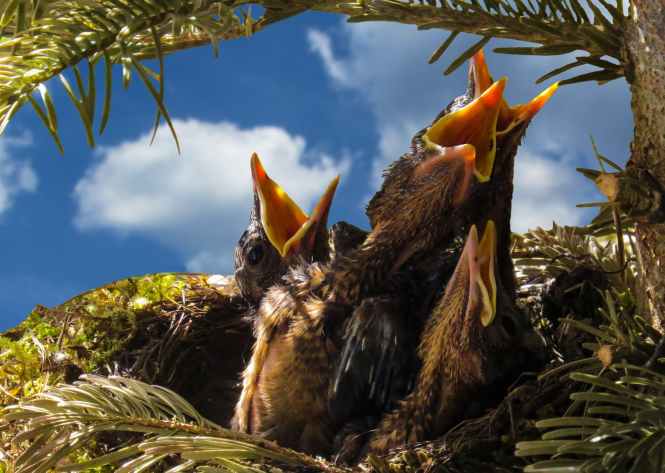
For two weeks, I have been watching the birds on our patio. They have gone from this:

selective focus photography of two hatchling birds in nest

Photo by 42 North on Pexels.com.

To this:

birds feed hunger nest

Photo by Pixabay on Pexels.com

The mother and father have been feeding them worms night and day, and they have grown by leaps and bounds. They are almost ready to fledge. They’re standing on the side of the nest, moving their wings up and down, waiting for the day when they can fly on their own. 

Nutritionally, I can see that worms are actually a super food for birds…that’s for sure. But is that something I should be touting for humans? Not necessarily. You can eat worms if you desire, but unless they are cultivated on a worm farm and clean, you might get parasites and some pretty bad germs from them.

Diets go in and out of fashion according to the fad of the day. For the past few months, it has been the Keto diet. Every ad seems to be touting it, and people are sharing its benefits with others and recommending they try it.  I’m sure that the diet works for some, but it may be unhealthy for others. Everyone has the responsibility to check out the efficacy of a diet before they go on it, but as we know, not everyone does their due diligence. 

Last week, I heard of a woman who overdid on the Keto diet. She ended up in the hospital with kidney failure. I was not surprised at the news, as my father died from kidney failure. When your kidneys are failing, you must limit the amount of protein you take in. The woman may not have had healthy kidneys to begin with, but she was unaware of that fact. 

I guess the moral here is that just because a diet works for some people and does them no harm does not necessarily mean it is right for everyone, especially yourself. I went on the Keto diet a few decades ago when it was called The Adkins Diet. I lost six pounds in three days and knew that something wasn’t quite right. It was not a good fit for me, so I immediately went off of it. 

Fad diets come and go, and eating trends change every few years. Remember gluten-free? It was such a fad that thousands began eating gluten-free when they didn’t need to. I’m sure many didn’t check out the downside of eating that way and the nutrients you miss if you leave certain grains completely out of your diet. Let’s be smart about fad diets and eating trends. Just because it is the latest trend does not mean it is necessarily good for us in the long run!

The Unwelcome Stranger

41ta8stxSzL._SX321_BO1,204,203,200_[1]

Early in the Fourth Century A.D., it is a perilous time to be a Christian. Things are about to change as Constantine, the Caesar from the north, has invaded Italia and is about to march on Rome. Livia Arvum, a young grieving widow, is unaware of how these events will soon touch her life. Lucius Marius, a Senatorial Legate, is racing towards Rome with news of Constantine’s plans when he is knocked off his chariot because of the Arvum’s sheep. Recuperating in their home, he becomes infatuated with Livia and decides she is the recompense he wants for the injuries he has sustained.

Will Livia have to betray her beliefs and morals in order to protect her family? Is there any way out of the situation? Will she ever find love again? Come join Livia on her journey as she leaves her home and finds God’s unexpected provision for her.

Available on Amazon, print 12.95, kindle .99  and Lighthouse Christian Publishing 12.95. Genre: historical fiction romance

Available on Amazon.it, print 11,91 euros, kindle .99 euro.

First World Problems

architecture building shop shopping

A few weeks ago, my son came over to visit. We were talking, and he began the next part of the conversation with, “Mom, I know this is a First World problem, but…” He then proceeded to talk about something he was thinking about purchasing. After he left, I thought about what he had said as far as First World problems went.

We know that in the Third World, many people suffer from a lack of basic necessities, i.e., sanitation, potable water, food, shelter, safety,  and access to basic medical care. Most people are just trying to survive in desperate circumstances. When we go to one of these countries, we are shocked by the conditions that people are living in; that’s what characterizes the Third World.

In the First World, the average citizen has most of their basic necessities. There are people without adequate health care, and some live in areas where they are concerned about safety, but in general, most of us have our basic needs met. We then deal with First World problems, such as: “Which house or car should I buy?” “Which doctor should I go to?” “Which job should I take, the one I like or the one that pays more?” We can indeed be stressed when we are in the middle of these decisions, but if we ask ourselves the right questions, we can lower our stress level. 

When we are stressing over consumer decisions, it would do us well to change our perspective and ask ourselves what kind of problem are we dealing with…First World or Third World? If it is a First World problem, let’s take a few moments, breathe and take stock. Usually, we are not facing issues of survivability; we are facing issues of desirability. If that is the case, let’s lower the temperature in the room and get a grip.  Yes, we will have to make a decision, but it will be one born of choice, not of necessity. That knowledge alone should give us a sense of peace.

What kind of problems are you dealing with today…First World or Third World?

Ch-Ch-Ch-Changes

mobile-phone-1875813_640

When I think of change, David Bowie’s song “Changes “comes to mind. The chorus is especially catchy and is expressive of time and the changes we all experience. Which generation would you say has experienced the most technological change throughout history? When I think about it, I believe it is the generation that was born at the beginning of the twentieth century. 

Before the dawn of the twentieth century, men primarily traveled on horseback. They may or may have not had indoor plumbing, and they had few machines to help them in their daily lives. Life was still very labor-intensive, for both men and women, and their lifespan was considerably shorter than it is today. They were old by the time they reached sixty, if they made it that far at all.

Think about the changes the generation born around 1900 saw during their lifetimes: automobiles, airplanes, indoor plumbing, electricity, washing machines, dryers, dishwashers, the atomic bomb, telephones, jets, rockets, satellites, televisions, computers, the lunar landing, and the list goes on. They spent their lives adapting to more and more change, and by the time they shuffled off this mortal coil, they had adapted to several stages of the burgeoning technological revolution.

When they looked back at what life was like when they were children or even young adults, they must have shaken their heads at what they had seen and experienced. Little did they know that the time they were living in had been predicted in the Bible. The prophet Daniel had several visions and was given prophecies concerning the end times, but he was told by an angel to “shut up the words and seal the book until the time of the end; many shall run to and fro and knowledge would increase.”

If that isn’t an apt description of the last one hundred and twenty years, I don’t know what is. The technological revolution has brought about the ability to travel to any part of the earth in a matter of hours. In 2017, there were 102,465 flights per day in the world; think about how many more there are today. Knowledge has increased and continues to increase at an exponential rate. What’s interesting about the knowledge explosion are the statistics. To quote David Russell Schilling, When “Buckminster Fuller created the Knowledge Doubling Curve; he noticed that until 1900 human knowledge doubled approximately every century. By the end of World War II, knowledge was doubling every 25 years. Today things are not as simple as different types of knowledge have different rates of growth. For example, nanotechnology knowledge is doubling every two years and clinical knowledge every 18 months. But on the average human knowledge is doubling every 13 months. According to IBM, the build out of the “internet of things” will lead to knowledge doubling every 12 hours.”

When I read the angel’s description of the time of the end, I would say we are definitely living in the end times. How does that strike you?

Lessons Learned From My Sons

pexels-photo-975265.jpeg

Anyone who has had sons knows that some of the best lessons in life can be learned from them. The first lesson I learned from my sons was Joy. When they were toddlers, they could find Joy in the smallest things, such as playing with the boxes at Christmas more than the toys that were in them. They didn’t need anything sophisticated to provide their Joy, they found it in their surroundings. They taught me to look for Joy in the ordinary circumstances of life.

The next lesson I learned from my sons was an appreciation of Beauty. They found Beauty in things I would have considered commonplace. When they would bring me a bouquet of dandelions, I would smile and thank them for the “pretty flowers.” They didn’t see weeds; they just saw the Beauty of nature. I learned to see Beauty where I hadn’t seen it before.

When they went to Preschool and Kindergarten, I learned Tolerance. They did not see color, race or economic status in their fellow students. They just liked who they liked and wanted to play with whomever they met. They had not learned to discriminate against people relating to anything society would later want to put on them. I knew I needed to be more like them and just view people as people…period.

When they were in Elementary School, I learned Generosity. Both of my sons began to see the economic disparity in their classmates’ lives and were concerned for them. One son went out for track. He had three pairs of tennis shoes and for the first few days, gave the shoes he was wearing away to someone needing a better pair. By the third day, he had to make a hard decision. If he gave away his last pair, he would not be able to go out for the sport himself. We all learned that, unfortunately, there are limits to where our Generosity can take us.

In Junior High, they taught me to let them have their Independence. Each had to make their own decisions and suffer the consequences for those decisions. Our youngest son went along with all of the other boys in the class and refused to write in a journal like his English teacher had assigned. He took a “D” rather than cooperate; and was grounded until he brought his grade up.  Our oldest was suspended for a few days when he turned on a kid who had been harassing him throughout the year. He was ready to deck the kid, and the principal told him that if he would just leave the kid alone, he could stay in school, and the other kid would be suspended. He said, “No, if you leave me in school today, I will hit him.” He did not hit the kid and took his suspension days, having stood up to him. Each had to make his decisions Independently of his father and me. 

In High School, they taught me Consideration and Respect. During a heated discussion with my oldest, he said, “Mom, you always think you are right!” That struck a chord with me as I could be a force to contend with in a verbal argument. I needed to learn to Consider my son’s opinions and not always think that I knew what was best for him. The same lesson came to me also via the younger son. He was a bright child, and I wanted him to go to college right after high school. He knew he wasn’t ready and had no desire to go to college then. When I finally quit fighting with him about it, he went about his own way, joined the Army and later worked in the construction industry. Eventually, he did go to college, but it was on his terms, pursuing a career he was interested in. I needed to learn to show Consideration for their opinions and Respect my sons’ decisions and let go of my preconceived ideas about what was best for their lives.

My sons have taught me a lot and still continue to teach me in their adult years. They are both intelligent and have deep moral values. They are better able to discern the gray areas in life, and because of them, I have learned not to be such a black and white person. I appreciate my sons and all of the lessons they have taught me, and I know I am a better person because of it.   

Wanted to reblog this today!