The Mystery of Prayer

Those of us who have prayed over the years know that prayer is a mystery. Having read many books on the subject, done many Bible studies and spent literally hours praying, I should have a pretty good understanding of the subject. But the truth is, I don’t. I’ll share what I have learned and what I think I know about prayer.

pexels-photo-267748.jpeg

Photo by Pixabay on Pexels.com

What I have found is that prayer seems to be answered in three ways: Yes, No, or Wait. Let’s take the first, when prayer is answered with a “Yes.” I have seen God work in miraculous ways. I have seen Him heal the sick, raise those who were practically dead from their sickbed, provide jobs, spouses, cars, you name it. It is always a glorious thing when God answers in the affirmative, and it feels great to have participated in prayer when I see those kinds of answers. 

Next, there are those times when God doesn’t answer in the affirmative. The person does not get healed, those who are terminally ill die, a person doesn’t get the job, car or whatever was prayed for. In other words, there is a resounding “No” to the prayer. That doesn’t feel good, and I often wonder why. I know God is on his throne and He doesn’t owe me any explanation, but still I wonder. Some people may tell me I didn’t have enough faith, but I know that isn’t true. I had the same amount of faith when I prayed for other things that were answered in the affirmative. Others may tell me that there must be some sin in my life, or else God would have answered my prayer. I know that is not true either. Yes, God will not hear my prayers “if I regard iniquity in my heart,” but in general, there is always some element of sin in my life. Every thought I think is not one hundred percent pure and loving, and every word I say is not either. That’s the way it is, and no matter how hard I try, that is the way it will always be until I go to be with the Lord. The truth is, in prayer, I can ask God for things, but I am in no position to “tell” God what to do. He is still in charge of the universe and sees the big picture. I am not in charge, I do not see the big picture, and I must submit myself to this truth. I know I can trust Him and that He is still on His throne when the answer is “No.”

Third, there are those times when God seems to be silent and no answer is forthcoming. A lot of times, I have the sense that I have been put on hold, and the answer will come about when the time is right. But when will the time be right? When will I get the job, the promotion or whatever I have been asking for? Of course, the answer is up to God, but usually the answer has something to do with me and my character. Many times, God is waiting on me for my character to develop so that He can put me in a position of greater authority and responsibility. If He allows me into that position too soon, I may fail because of a lack of character development. These are the hardest prayers to wait for, but they are the most necessary. I need to wait patiently during those times and participate with God when He is working on my character. Over the years, I have learned that I do not want to be put in a position of responsibility that is greater than my ability to handle it. When the answer turns to a “Yes,” I am thankful that He made me wait until the time was right.

Prayer is a mystery, and there is no way that I understand all there is to know about it. I will continue to trust God and to pray for things, knowing that I will get an answer, even if it is not the answer I am hoping for.

What about you? What have you found out about prayer? How has your understanding of the subject changed over the years? Let me know so that we can collectively learn together. 

The Hidden Cost of War

We have just celebrated Veterans Day, where we honor those who have served their country in the military. We also honor those who have given their lives in service to our country. We look at the cemeteries and we see the headstones and the flags and we remember the ultimate sacrifice they gave for us. It is a very sobering reality when we think about it.

cemetery-269663_640photo by jmp200962  Courtesy of Pixabay

There is another cost of war, one we don’t really think about except on days like Veterans Day.  That cost is usually hidden from the majority of us unless we know someone personally who has lost a loved one in the line of duty for our country. That is the cost that the families of those veterans pay. The mothers, fathers, wives, children, brothers and sisters of those fallen will pay that price for the rest of their lives. 

The person who is lost will not be around the family table for dinner, and their place will be empty for all to see and feel. Every day, the families of those who are gone must get up and continue their lives. They will carry the memory of that loved one in their hearts, and they will try to make up for the loss of that person to their children and grandchildren.

Not only do we owe a debt of gratitude to those who gave their lives in service for our country, but we also owe a debt of gratitude to their families, who will also be enduring the cost of that sacrifice for the remainder of their days.

Let us remember them also and keep them in our thoughts and prayers.

“Greater love hath no man than this, than a man lay down his life for his friends.”  John 15:13 (KJV)

Going A.W.O.L. from the UnCivil War

No matter who wins in the elections today, I just want my friends and family to know that I am going A.W.O.L. from the UnCivil War.

two person holding white and green peace wreath

Photo by Anastasiya Lobanovskaya on Pexels.com

There has always been an UnCivil War going on in politics, but I became acutely aware of it when Bill Clinton was elected. I had a girlfriend whose mother-in-law ran in high circles in society; she called and told me many spurious things about the Clintons. I then heard many of those things repeated on radio talk shows and later from other people who were only too happy to repeat what they had heard in the news media. The upshot of it all was that, in the end, the opposing political party was only too happy to impeach him for strictly political purposes.

George Bush was elected and the same thing happened. He was demonized for getting us into the  Iraq War. Funny thing was, he couldn’t have done it without the approval of the Senate. None of the Senators seemed inclined to take any responsibility for their own part in getting us into the War, so when we became entrenched in the quagmire of Iraq, he was continually demonized and made into a laughing stock.

Barak Obama was elected and it was the same thing. Terrible things were said about him and people kept hammering him from the moment he took office. Demonization and innuendo were the hallmarks of the War against him. His opponents would not or could not say anything positive about him.

Donald Trump was elected and the War has escalated into almost unbearable proportions. Both sides of the political spectrum have begun to demonize those that don’t agree with them. This lack of civility has reached epidemic proportions, dividing people at work, in their families, and affecting their relationships with other members of society.

This War has got to stop. If we want to get anything done to improve our society, we must work together with those of another political persuasion and become A.W.O.L. from the UnCivil War. This UnCivil War has damaged the fabric of our society. People on both sides of the political map view the other side as enemies, instead of brother citizens who disagree with them politically. I, for one, do not want to be part of this War, so I am officially going A.W.O.L.

Today is election day. We all get the opportunity to vote our beliefs and values at the polls. I will try to respect those elected to office and not malign them. I will believe good about them until proven otherwise. I will not send negative political emails around to my friends and family or post negative political remarks on my Facebook page. In other words, I am going to be an American who respects her fellow citizens regardless of their political beliefs, race, religion or ethnicity. 

“These are the things you shall do:

Speak each man the truth to his neighbor;

Give judgment in your gates for truth, justice and peace;

Let none of you think evil in your heart against your neighbor;

And do not love a false oath.

For all these are things that I hate;

Says the Lord.”

Zechariah 8: 16-17


Moral Relativism – Does It Work On A Personal Level?

Moral Relativism holds the view that there are no absolute standards of right and wrong. Moral choices are made at the time dependent on the culture one is in or the situation one is in.

meadow-680607_640 Photo by geralt. Courtesy of Pixabay.

Moral Relativism began to be taught in some of our schools and universities in the 1980s. Some have come to believe in Moral Relativism, and we see that played out in scenarios where people justify and rationalize their actions based on what they want to do at the time. We also see it displayed where people choose to do wrong because they believe that “the ends justify the means.” After all, it’s all relative!

As a belief system, Moral Relativism has its flaws. If one follows it on a personal level, it begins to break down rather quickly. A Moral Relativist may believe that it is okay to lie to a teacher about not turning in his homework if it will help him get a better grade. He may steal money from a friend because he believes he needs it more than his friend. He may sleep with a friend’s wife because it feels “right” at the time, and he will excuse his actions based on his belief system. 

The Moral Relativist may justify his actions to himself, but will react quite differently when these actions are perpetrated against him. Have you ever seen a Moral Relativist react when someone stole his car, slept with his wife, or lied to him about something? He is usually outraged because someone has done him “wrong.” I have not seen one willing to apply his own philosophy to another and accept that the situation is “relative to the other person’s point of view.”

The flaw with Moral Relativism when it is applied on a personal level is that it breaks down when the moral and ethical situations are reversed. No one wants to be lied to, cheated on, or stolen from. We all have an innate sense of right and wrong, and even if we will go against our own innate beliefs to achieve our ends, we will decry another who does us wrong according to our own innate standards.

Whether one wants to believe it or not, we are all born with a conscience. If you watch toddlers, you will see that they know when they have done wrong. There is a look on their face when they lie to you. When they steal a cookie, they instinctively hide to eat it. They know if they hurt another, they have done wrong. Small children feel guilt when they have violated their own conscience.

Whether one wants to believe it or not, there are universal moral laws, and they are placed inside of us by our Creator. People of all cultures know that lying, stealing and murder are wrong. No matter what their religious beliefs or ethnicity, there are universal standards of morality written into each human being. Those standards, when broken, cause us to feel guilt because our conscience tells us we have done wrong.

(for not the hearers of the law are just in the sight of God, but the doers of the law will be justified; for when Gentiles, who do not have the law, by nature do the things in the law, are a law to themselves, who show the work of the law written in their hearts, their conscience also bearing witness, and between themselves their thoughts accusing or excusing them) Romans 2: 14-15

When God Weeps…

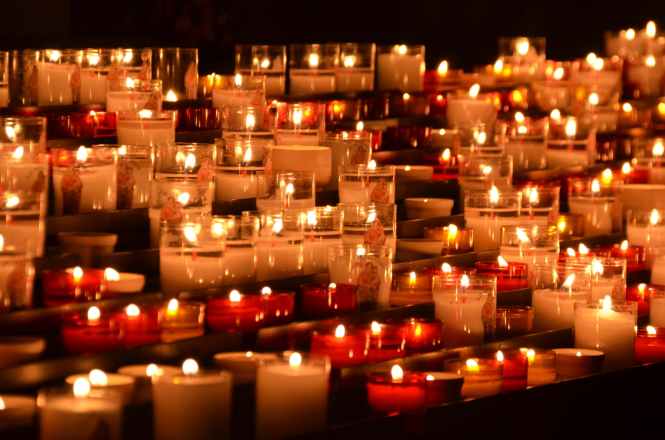
candlelight candles

Photo by Irina Anastasiu on Pexels.com

This weekend another eleven innocent lives were taken at a Jewish Synagogue in Pittsburgh. We feel shocked and saddened by another act of senseless violence committed by a person filled with hatred. We seek for answers and we find none. We want to blame someone and so we lash out at whoever we feel is responsible for this terrible crime.

star-of-david-278820_640photo by kahln/courtesy of Pixabay.

Regardless of who we think is responsible, or what laws we think have allowed this tragedy to happen, we all must look deep inside our own hearts. If we want the hatred and division to stop in our society, we must take an inventory of ourselves and start there.

Haters hate because they want to. They don’t need any help hating; they just need someone to hate. They will find an outlet for their hate, and it will make them feel justified in their hearts. We all have to ask ourselves if we are becoming part of the problem of hatred and division in this country.

No matter where we are on the political spectrum, are we being sucked into a culture of anger and hatred? Do we feel justified in allowing ourselves to demonize those of another political or religious persuasion? Have we been manipulated by the pundits to view others as enemies instead of people with differing opinions or beliefs?

Each of us must examine our own hearts. None of us are justified in hating others because of the color of their skin or because of their religious or political affiliation. We must take a few steps back and reject rhetoric when we hear others trying to divide us and keep us apart from each other.

Let’s all stop becoming part of the problem and become part of the solution.

“If you take away the yoke from your midst,

the pointing of the finger, and speaking wickedness,

If you extend your soul to the hungry,

And satisfy the afflicted soul,

Then your light shall dawn in the darkness,

And your darkness shall be as the noonday.”

Isaiah 58: 9 – 10 (NKJV)

Safe Spaces – Then and Now

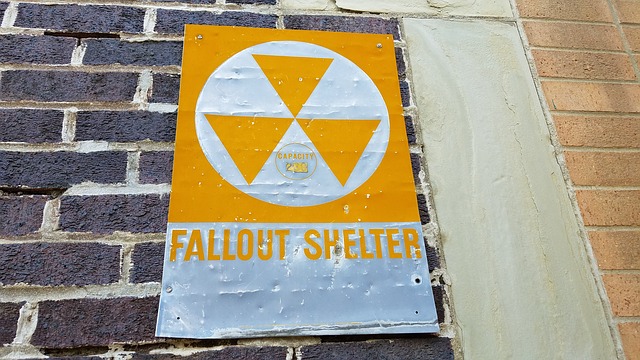
I was thinking about Safe Spaces the other day, and I realized they have changed a whole lot from when I was growing up. I was in grade school when the Cuban Missile Crisis occurred. Afterward, there was a surge in activity in most cities. An Early Warning System was put into place in case there was a nuclear attack. In our town, a speaker was set up on top of the tallest building. For a few years after that, we would have monthly drills. The siren would go off, and if we were at school, we were instructed to get under our desks and wait for the all-clear siren. Our school was about three blocks from a building where there was a bomb shelter set up. In case of a real nuclear attack, I’m assuming we would walk to the bomb shelter. If we could all reach the bomb shelter, we would be “safe” from the impending attack. That was our Safe Space. fallout-shelter-2835496_640 Photo by Lenzius. Courtesy of Pixabay.

I remember walking by that building as a child and thinking about the Bomb Shelter in the basement. I didn’t know anyone in my town who built one in their backyard, so basically, we had one shelter for about 17,000 people. Anyone who was lucky enough to be near the shelter when the attack occurred would be safe initially from the radioactive fallout. The whole town viewed that building as their Safe Space.

Fast forward fifty years. Colleges and universities initially set up Safe Spaces for students so that they could talk about their problems in a safe environment where no one would harass them or make fun of them. I see no problem with that. Students need a space where they can go and be themselves without fear of repercussions. Since their initial set-up, Identity Politics has taken over, and some students go to Safe Spaces so that they will not have to listen to divergent opinions. Instead of interacting in a climate of differing ideas, some students have chosen to isolate themselves so that they do not have to hear or think about anything dissimilar to their particular beliefs.

The Safe Spaces of my youth were set up to protect us physically from real biological harm. Some of the Safe Spaces today are being used to protect students from Ideological Diversity. Do they really need protection from ideas that are disparate from the ones they espouse at the moment? What kind of thinkers are we enabling if they will not expose themselves to differing ideas? Are we really willing to encourage students to be weak mentally and not expose themselves to process dissimilar opinions?

These are questions we need to ask when setting up Safe Spaces on campus. Are they there to help students who really need help, or are they being used to protect students from hearing something they don’t like or feel uncomfortable with? What kind of preparation are we giving them for entry into adult society? They will, after all, have to go out into the real world when they graduate and get jobs. On those jobs, they will be exposed to people from many diverse backgrounds who hold opinions that may be quite different than the ones they espoused in college. Will they be able to cope with them? After all, I have never seen a job site yet that had a Safe Space set up for employees who felt uncomfortable listening to their fellow workers’ opinions. Have you?

Speaking Truth to Power

silver colored microphone

Photo by Skitterphoto on Pexels.com

A few weeks ago, a couple of politicians made some remarks that most people recognized as improper. They both commented that it was okay to be uncivil to those of a different political persuasion; one even recommended using physical force on those opposing his views. I waited for someone in their political party to speak against what was said. It wasn’t long until one did. One lone female Senator spoke up and disagreed with them. A few days later, a former First Lady also spoke up and took issue with both statements.

It made me think, “Why is it so hard to speak truth to people in power? Why were there only two women who were willing to take up the microphone and disagree with what was said?” There are many answers to these questions. First, most people (yes, even those who are in positions of political power) are afraid to speak up and call out those in their own political party who may be making statements that need to be challenged. Second, there will usually be some sort of repercussions if one does speak up. These repercussions may not be serious, but just the fact that a person is not willing to fall in line with the herd will set one apart. Third, it takes real courage to speak up and stand up when few others are willing to do so.

We live in a society that is becoming more and more divisive. Tribalism has set in, and one is expected to tow the line of whatever tribe one is a part of. We do not have to go along with this kind of thinking or social engineering. We can break out of our “tribal thinking” and be willing to take a stand should someone in our “tribe” make statements that are uncivil, rude or unnecessarily divisive.

Personally, I prefer to not be part of any “tribe.” I want to be an independent thinker who recognizes the worth of each individual and gives people the freedom to think differently than I do. How about you? Have you noticed more pressure than usual to just go along with what your group or tribe is saying and just keep quiet? What do you do about it?

Where are the Martin Luther Kings and the Bobby Kennedys of this Generation?

Having grown up in the sixties, I was privileged to watch and listen to great men like Martin Luther King Jr. and Bobby Kennedy. Martin Luther King Jr. had the vision and the voice to inspire a generation of people to not accept the villainy of segregation. Bobby Kennedy had the same vision, and with his position as Attorney General, was able to help enforce the law and not allow segregation to continue.

martin-luther-king-jr-393870_1280

photo by skeeze courtesy of pixabay

Martin Luther King Jr. spoke to us and taught us the power of passive resistance. He never advocated violence, and he never tried to incite us to hatred or violence in any form. He was a man whose vision made us all better people, and he inspired change for the millions of people who would come after him.

robert-kennedy-572617_1280

photo by skeeze courtesy of pixabay

Bobby Kennedy had the ability and the power of the Federal government to implement that change. He believed it was the right thing to do, and he brought the full force of the law to bear to implement it.

Today, there are many worthy causes that I would love to lend my voice to, but I can’t. Their leaders inspire hatred and violence, and instead of bringing people together, they are tearing apart the fabric of our society.

Does anyone miss the kind of leaders that Martin and Bobby were? I certainly do, and I am looking for men and women like them, people of high caliber and vision, who can bring us together and help solve the problems we face in our society today.

Hi! In light of the comments by some politicians this week, I thought I would repost this! Have a great week!

Love Your Enemies

sunset-hands-love-woman.jpgOne of the hardest things Jesus ever told his followers was, “Love Your Enemies.” As a believer in Jesus Christ, I have been challenged by this command ever since I first read it. How do we truly love our enemies?

First, we have to decide who our enemies are. On a personal level, our enemies are those people who go out of their way to make life miserable for us. They deliberately try to do us harm, either mentally, physically, emotionally, spiritually or socially. They are pretty easy to identify, and I bet if I asked you who your enemies are, you could whip out a list pretty fast.

Next, we have to look at who our enemies are on a broader scale. They may be the leaders of a country who are threatening to annihilate us or those who are working against our national interests in the international arena. The people in those countries may not actually be our enemies, but are people at the mercy of those in control of the government of their countries.

Then we have to look at who are not our enemies. Sometimes this takes rethinking the word “enemy.” Our teachers are not our enemy if they do not give us the grade we think we deserve in class. Our boss is not our enemy if he doesn’t give us the raise we think we are entitled to. Our parents are not our enemies if they don’t let us do everything we want to do. The judge is not our enemy if he gives us a fine for speeding. Anyone who holds us accountable for our actions or performance is not our enemy.

People of another political persuasion are not our enemies. They may not agree with our opinions, and we may not agree with theirs, but that does not make them our enemy. They are mutual citizens of a country that needs differing political views in order to serve the common good. We need to resist the constant media barrage that seeks to pit those with one political view against another.

People of another religious persuasion are not our enemies. Believing something different from what we do does not constitute grounds to classify someone as an enemy. There may be people on the fringe of a religious group that truly seek to harm us, but the group as a whole is not our enemy.

Once we identify who is and who are not our enemies, how do we treat them? How do we actually love them? Jesus continued on and said, “Bless those who curse you, do good to those who hate you and pray for those who spitefully use you and persecute you.” That sounds like a pretty tall order to me, and it will take a major change in our present mindset in order to accomplish it.

Let’s break it down: “Bless those who curse you.” How do we do that? First, we do not curse them back, i.e., if they are swearing at us, we do not return fire with expletives. It takes practice, but when someone is going on a rant, we walk away. If we can, we say something positive to them or at least something that will help to diffuse the situation. We do not call them names, even under our breath. When these people are not on a rant, we may say something positive or uplifting to them, i.e., blessing them.

He then said: “Do good to those who hate you.” This is not easy stuff to swallow, let alone digest. We have to choose to do good to someone who has not had our best interests at heart. This may entail treating with kindness the shrew in the break room who is always gossiping about us or our friends. It may mean helping out a person who has been unkind to us in their time of need. Nothing speaks louder than when we purposely act kindly towards those who have not treated us well and do not deserve our kindness.

Finally, he said, “Pray for those who despitefully use you and persecute you.” This is actually the key that will open our hearts and help us extend kindness to those who have been unkind to us. If we spend time in prayer for those who have offended us, we will find our attitudes changing. When we ask for good things for them, the bad feelings we have inside begin to disappear. We begin to see them as the flawed people they are, and we quit giving them power over our lives. When we want what is good and best for them, we will behave in a different manner towards them. Perhaps then we can even do what Jesus said. One day, we may even be able to love them.

Hi, I’m on hiatus, but wanted to repost one of my faves in this hot political climate! Love you guys  (and gals)  alot!

Rain Of God — The Fashioned Woman

This is one of my favorite posts from a blogger who deals with chronic illness. I wanted to pass it on to you!

I woke up this morning with babbling brooks overflowing upon the rocks of my soul that I must write and pray unto our Lord. I sang the songs of worship that flowed from my heart knowing that this was not the flesh that I awoke to, but the presence of God fully in my […]

via Rain Of God — The Fashioned Woman