Expiration Dates

E. date

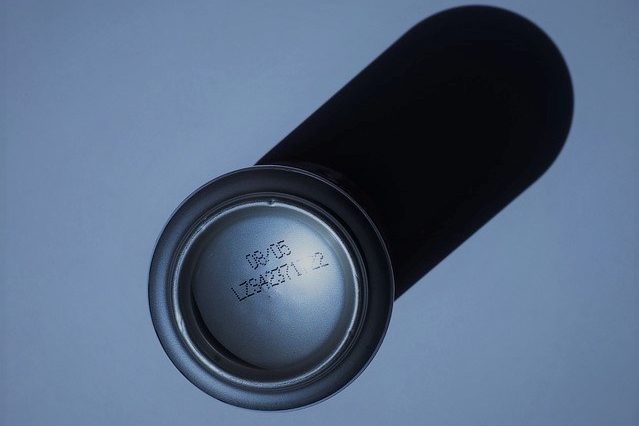
For the last few weeks, I have been thinking about Expiration Dates and the fact that each one of us has one. I see each of us as having an Expiration Date stamped on the back of our necks at the time of our birth. It’s not a visible mark, mind you. You know, one that we can see if we hold a mirror up to the back of our necks. It is invisible and has been stamped there by our Creator.  No one else can see it. He alone knows which day will be our final day. 

The problem is that none of us knows our Expiration Date. If we did, we would live quite differently than we do. Most of the time, we live as if we have all the time in the world, but we don’t; our time is limited here on Earth.  Intrinsically, we know this fact, but it is hard to incorporate it into our daily lives. How can we live in such a way that we keep our eyes on the Eternal and not on the transient?

If you are like me, it will take intentionality in order to do it. I must remind myself daily that this could be my last day, and I need to do whatever I am supposed to do today. If I live that way, I will be ready when my Expiration Date arrives.

What about you? How do you keep your mortality in mind so that you can keep your priorities straight? Let me know.

“So teach us to number our days that we may gain a heart of wisdom.” Psalm 90:12

Lost

Several years ago, my husband wanted to go out in the woods and use his compass to find a lake. We didn’t take a lot of provisions with us or a flashlight because we were just going to hike in and out during the daytime. We also did not tell anyone where we were going, so off we went. Instead of taking the road to the lake, we parked the car a few miles from the lake, and my husband looked at his map and took a compass heading. We followed that heading through the woods until we reached the lake. It took a few hours to get in, but all in all, it was a successful venture. 

We decided to follow the road back to the car and began to walk. What we didn’t know was that the road forked a little bit north of us, and that the road we were on was not the one we thought it was. After a while, we realized that the road was not taking us back to the car. We talked about what we should do since it was going to be dark in about an hour. We decided to backtrack to the place we left from at the lake. We would then follow the compass heading through the woods back to the car.

person holding compass

Photo by Valentin Antonucci on Pexels.com

By the time we got to the lake, it was getting dark. Remember, my husband did not have a flashlight with him. In order to get out, he had me walk fifteen or twenty feet ahead of him. He would take a compass heading and have me move until I was in line with it. He would then come and stand where I was, and then I would walk another fifteen or twenty feet. We did that for the next few hours. I would walk ahead, and he would take the heading. I would move until I was on that heading, he would walk up to where I was standing, and we would do it all over again. Over and over we did those same repetitious steps. 

The moon rose higher and illuminated the woods. I felt better about it, but knew we were “lost,” and so I kept repeating Bible verses to myself, holding onto whatever I could until we got out of the woods. My husband wasn’t worried at all because he trusted the compass and knew that if we followed it, eventually we would come out of the woods by the car.

Finally, the woods cleared and we saw the road. We came out of the woods within about fifteen yards of the car. To say I was greatly relieved is an understatement. But I did learn something that day; I can trust the compass, and even if I don’t know where I am. The compass will always point me in the right direction. 

That experience was a great life lesson for me, both practically and spiritually. We, as finite humans, will sometimes find ourselves in situations where we feel we are lost in the woods. We cannot see our way out, and it feels dark. We need to remember that our sense of direction will lie to us, our emotions will lie to us, but our compass will never lie to us. If we keep our eyes on the Lord (the compass) and check with the map (the Word), we will be able to walk in the right direction, and eventually we will get out of the situation we are in. We must learn not to rely on what we think is happening around us and try to find our own way out of whatever situation we are in. The book of Proverbs has a few great verses that explain this principle:  “Trust in the Lord with all your heart, and lean not on your own understanding. In all your ways acknowledge Him and He will direct your paths.” Proverbs 3: 5-6.

For me…lesson learned…trust the Compass!

It’s Summer, and I am going to reblog a few of my outdoor posts!
Facing the Music

man playing violin on stage

Photo by Gabriel Santos Fotografia on Pexels.com

Every Saturday, I sit down and put all the debit slips from the week in my checkbook; I then balance the checkbook. The next week, same thing. Once a month, we get our bank statement in the mail, and I have to “face the music.” Did I make any math mistakes…you know, add the two – carry the one? If so, when it is time to balance the statement, I must “face the music” and make the corrections. Sometimes, I do pretty good and I am about on track with the bank. Other times, I have made mistakes in our favor. That is always a good day when I can add money back into our account. There are other days, however, when I have made mistakes that are not in our favor, and I must subtract money from our available balance.

If the mistakes aren’t too big, I don’t mention them to my husband. My motto is: No harm, No foul,  but if the mistakes are over about $25.00, I feel I need to let him know. Not that he says anything, mind you. He just gives me that look that says, “Why don’t you use a calculator when figuring the balance?” The problem is: I do use my calculator now, but I can still make mistakes when entering the numbers.  No matter how hard I try, I still cannot do it perfectly.

Last evening, when I was out on my nightly walk, I began thinking about “facing the music” in terms of our trespasses. What if I didn’t confess them to the Lord as they happened, instead I waited until Saturdays to get things right? I would have to start writing them down to remember them all. You know how the list would go…I had a bad thought about someone, I had a bad attitude when I talked to my boss, etc., the list would continue on and on.

What if, rather than once a week, I waited until the end of my life to try and get things right with the Lord? What would that look like? I know one thing for sure: there is no way I could remember all of the wrong things I had done. And yet, some people saunter through life like that. They don’t even think about “facing the music” when they die. Surely, there must be a better way.

For daily debits, think in terms of 1 John 1:9, “If we confess our sins, He is faithful and just to forgive us our sins and to cleanse us from all unrighteousness.” For those who are sauntering through life not thinking in terms of “facing the music,” Hebrews 9:27 should give them pause: “And it is appointed for men to die once, but after this the judgment.” Let’s face it, there is not a notebook big enough to write down all the sins we each commit in our lifetimes. You see, that’s why Christ came. The next verse says, “so Christ was offered once to bear the sins of many.” There is a “Get out of Hell” free card; we just have to be willing to take it. 

The Unwelcome Stranger

41ta8stxSzL._SX321_BO1,204,203,200_[1]

Early in the Fourth Century A.D., it is a perilous time to be a Christian. Things are about to change as Constantine, the Caesar from the north, has invaded Italia and is about to march on Rome. Livia Arvum, a young grieving widow, is unaware of how these events will soon touch her life. Lucius Marius, a Senatorial Legate, is racing towards Rome with news of Constantine’s plans when he is knocked off his chariot because of the Arvum’s sheep. Recuperating in their home, he becomes infatuated with Livia and decides she is the recompense he wants for the injuries he has sustained.

Will Livia have to betray her beliefs and morals in order to protect her family? Is there any way out of the situation? Will she ever find love again? Come join Livia on her journey as she leaves her home and finds God’s unexpected provision for her.

Available on Amazon, print 12.95, kindle .99  and Lighthouse Christian Publishing 12.95. Genre: historical fiction romance

Available on Amazon.it, print 11,91 euros, kindle .99 euro.

First World Problems

architecture building shop shopping

A few weeks ago, my son came over to visit. We were talking, and he began the next part of the conversation with, “Mom, I know this is a First World problem, but…” He then proceeded to talk about something he was thinking about purchasing. After he left, I thought about what he had said as far as First World problems went.

We know that in the Third World, many people suffer from a lack of basic necessities, i.e., sanitation, potable water, food, shelter, safety,  and access to basic medical care. Most people are just trying to survive in desperate circumstances. When we go to one of these countries, we are shocked by the conditions that people are living in; that’s what characterizes the Third World.

In the First World, the average citizen has most of their basic necessities. There are people without adequate health care, and some live in areas where they are concerned about safety, but in general, most of us have our basic needs met. We then deal with First World problems, such as: “Which house or car should I buy?” “Which doctor should I go to?” “Which job should I take, the one I like or the one that pays more?” We can indeed be stressed when we are in the middle of these decisions, but if we ask ourselves the right questions, we can lower our stress level. 

When we are stressing over consumer decisions, it would do us well to change our perspective and ask ourselves what kind of problem are we dealing with…First World or Third World? If it is a First World problem, let’s take a few moments, breathe and take stock. Usually, we are not facing issues of survivability; we are facing issues of desirability. If that is the case, let’s lower the temperature in the room and get a grip.  Yes, we will have to make a decision, but it will be one born of choice, not of necessity. That knowledge alone should give us a sense of peace.

What kind of problems are you dealing with today…First World or Third World?

Ch-Ch-Ch-Changes

mobile-phone-1875813_640

When I think of change, David Bowie’s song “Changes “comes to mind. The chorus is especially catchy and is expressive of time and the changes we all experience. Which generation would you say has experienced the most technological change throughout history? When I think about it, I believe it is the generation that was born at the beginning of the twentieth century. 

Before the dawn of the twentieth century, men primarily traveled on horseback. They may or may have not had indoor plumbing, and they had few machines to help them in their daily lives. Life was still very labor-intensive, for both men and women, and their lifespan was considerably shorter than it is today. They were old by the time they reached sixty, if they made it that far at all.

Think about the changes the generation born around 1900 saw during their lifetimes: automobiles, airplanes, indoor plumbing, electricity, washing machines, dryers, dishwashers, the atomic bomb, telephones, jets, rockets, satellites, televisions, computers, the lunar landing, and the list goes on. They spent their lives adapting to more and more change, and by the time they shuffled off this mortal coil, they had adapted to several stages of the burgeoning technological revolution.

When they looked back at what life was like when they were children or even young adults, they must have shaken their heads at what they had seen and experienced. Little did they know that the time they were living in had been predicted in the Bible. The prophet Daniel had several visions and was given prophecies concerning the end times, but he was told by an angel to “shut up the words and seal the book until the time of the end; many shall run to and fro and knowledge would increase.”

If that isn’t an apt description of the last one hundred and twenty years, I don’t know what is. The technological revolution has brought about the ability to travel to any part of the earth in a matter of hours. In 2017, there were 102,465 flights per day in the world; think about how many more there are today. Knowledge has increased and continues to increase at an exponential rate. What’s interesting about the knowledge explosion are the statistics. To quote David Russell Schilling, When “Buckminster Fuller created the Knowledge Doubling Curve; he noticed that until 1900 human knowledge doubled approximately every century. By the end of World War II, knowledge was doubling every 25 years. Today things are not as simple as different types of knowledge have different rates of growth. For example, nanotechnology knowledge is doubling every two years and clinical knowledge every 18 months. But on the average human knowledge is doubling every 13 months. According to IBM, the build out of the “internet of things” will lead to knowledge doubling every 12 hours.”

When I read the angel’s description of the time of the end, I would say we are definitely living in the end times. How does that strike you?

This Play Should Have Closed After Opening Night!

elephant-2798628_640

For almost two and a half years, I have watched the political drama playing out in our nation’s capital. Instead of focusing on our country’s problems, our representatives in Washington have spent their time shooting volleys at each other across the aisle. Our elected officials should be trying to find solutions for the problems that plague us as a society, but sadly, they are not. These political players don’t seem to understand that Americans elected them with the hope that they would do something constructive while they are on the job, supposedly serving their constituents. If they worked in the private sector, they would all have been fired long ago for their ineptitude and inability to get anything accomplished.

The rent is paid on the theater, and the actors in this drama continue to get their salaries whether anyone is sitting in the seats or not. Let’s hope they wake up and see that the only ones watching their spectacle are the stagehands and the media sycophants hanging around the dressing rooms. Sadly, the audience has long since left the building and is looking elsewhere for solutions. If this political production had opened on Broadway, it would have closed months ago, and the actors would be looking for work elsewhere. If only…

The Blogger’s Bible

51MS0HrzOJL[1]

I’ve noticed a few of my recent followers are newbies to the Blogging Community.  I could write a post and tell you what I have learned about blogging, but most of what I have learned, I learned from Kristen Lamb in her book “Rise of the Machines.” I highly recommend it to any blogger or author who is making their foray into the world of social media. It is a great resource, not only for blogging but also for publishing. 

This week, my blog hit 500 followers. I want to thank everyone for the follow. God Bless! I have so enjoyed meeting you and reading your posts!

images[7]