Predictive Prophecy

pexels-photo-268424.jpeg

Anyone who has gone through the University system has met many a professor who does not believe in a Supreme Being. They can be quick to denigrate the Bible and tell you that it is just an ancient book that has no relevance in today’s society. When they say that, you may go back to your dorm room and look at your Bible and think, “Is that really true? Does it indeed not have any relevance for today?”

So what makes the Bible unique? What makes it different from any other book that has been written? How can it stand the test of time and still come out as a best-seller even in modern times? Why can we indeed depend on it as a source of truth and inspiration? Two words…predictive prophecy. The Bible claims to be the very words of God. What authenticates it and has authenticated it through centuries past? Predictive prophecy; that is what makes it different from any other source of wisdom and verifies the authority of its words.

What is predictive prophecy? Throughout the Bible, there are hundreds of prophecies about Jesus, Israel, the nations, and specific people. Hundreds of these prophecies have already been fulfilled accurately. They are so accurate in their fulfillment that they cannot be denied. For example, there are hundreds of prophecies about Jesus, the Messiah. During the course of his birth, life and death, he fulfilled over two hundred of them. The odds of that happening are astronomical, to say the least. We know that if these were fulfilled at his first coming, the remaining prophecies will be fulfilled during his second coming and reign.

The nation of Israel strayed from God, and there were many prophecies predicting its judgment. Over and over, these prophecies were fulfilled. They were scattered among the nations, and the prophecies concerning their regathering are happening right to this very day. Even the prophecy in Isaiah 66:8, “Can a nation be born in a day?” was fulfilled on May 14, 1948. 

The ruler, Cyrus the Great, was named in the book of Isaiah one hundred and fifty years before he came into power. Is that some sort of coincidence? I don’t think so. In the book of Daniel, the eleventh chapter encompasses a brief history of the wars and ensuing intrigues between the Seleucids of Syria and the Ptolemies of Egypt. It is so accurate that historical scholars have a hard time believing it was written hundreds of years before the events took place.  

These are just a few of the examples of predictive prophecy in the Bible;  there are many more within its pages, too numerous to count. One thing we can be sure of is this; if the previous prophecies were fulfilled, the future prophecies will be also. How could this happen? I believe that God sits outside of time and sees the end from the beginning. He inspired the prophets of old to write things that they themselves did not see or understand, things that would come to pass in the future. We can rely on the truth of the Bible, and know that its predictive prophecy is the proof of it.

I Want My Church to be Multi-Racial, Multi-Ethnic and Multi-Cultural.

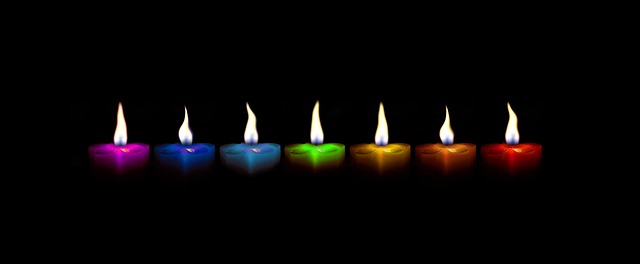
This past Sunday in church I sat next to a young Hispanic man. As I was thinking about our differences, I looked around at the people in our church, and I saw that each one of us is like a candle. The only difference was that each candle had a different color coating on the outside.

candles-2899921_640                                                       photo by geralt – courtesy  of Pixabay

Years ago, I was watching Dr. A.R. Bernard, the Pastor of the Cultural Christian Center in Brooklyn, New York, on television. He was talking about how the leadership in his church purposely went after racial, ethnic and cultural diversity. They wanted their church to be representative of the city they were living in and be a microcosm of the world in general. I liked that idea, and it stuck with me. He talked about how they would purposely seek out leaders from different backgrounds to be front and center in their church. He said that if you want your church to be a certain way, you must make an effort to make it happen.

That became a dream of mine. I don’t want to go to a church that is homogeneous racially, ethnically or culturally. We need people from different backgrounds in order to understand each other and not be afraid of our differences. Each race, ethnicity and culture can add an element to our church that would otherwise be missing. I, too, want to go to a church that is a microcosm of the city and world I live in.

I looked around at my church, and thankfully, it more than represents the community we live in racially. We exceed the percentages for our city as far as ethnic diversity. Culturally, I’m not sure how we are doing. I haven’t met many people from different countries around the world. That is still a dream of mine, that God would bring them to our church.

We have many churches in our area that represent their native countries and speak their languages, i.e…Greek, Russian, Ukrainian, Korean, etc. That is all well and good, and I understand why people want to worship in a setting that they are familiar with and with people who speak their native languages. I’m just putting the word out, though. We need a few of them from each church to come to ours, so that we can get to know them and the gifts and insight they would bring to our body of believers.

So, if you’re new to the area, come on in. We don’t need people who look like we do or talk like we do. We need you, with your racial, ethnic and cultural differences. You will truly make our church representative of the world we live in, and we will all be the better for it.

Lessons Learned From My Sons

pexels-photo-975265.jpeg

Anyone who has had sons knows that some of the best lessons in life can be learned from them. The first lesson I learned from my sons was Joy. When they were toddlers, they could find Joy in the smallest things, such as playing with the boxes at Christmas more than the toys that were in them. They didn’t need anything sophisticated to provide their Joy, they found it in their surroundings. They taught me to look for Joy in the ordinary circumstances of life.

The next lesson I learned from my sons was an appreciation of Beauty. They found Beauty in things I would have considered common place. When they would bring me a bouquet of dandelions, I would smile and thank them for the “pretty flowers.” They didn’t see weeds, they just saw the Beauty of nature. I learned to see Beauty where I hadn’t seen it before.

When they went to Preschool and Kindergarten, I learned Tolerance. They did not see color, race or economic status in their fellow students. They just liked who they liked and wanted to play with whomever they met. They had not learned to discriminate against people relating to anything society would later want to put on them. I knew I needed to be more like them and just view people as people…period.

When they were in Elementary School, I learned Generosity. Both of my sons began to see the economic disparity in their classmates’ lives and were concerned for them. One son went out for track. He had three pairs of tennis shoes, and the first few days, he gave the shoes he was wearing to someone needing a better pair. By the third day, he had to make a hard decision. If he gave away his last pair, he would not be able to go out for the sport himself. We all learned that, unfortunately, there are limits to where our Generosity can take us.

In Junior High, they taught me to let them have their Independence. Each had to make their own decisions and suffer the consequences for those decisions. Our youngest son went along with all of the other boys in the class and refused to write in a journal like his English teacher had assigned. He took a “D” rather than cooperate; and was grounded until he brought his grade up.  Our oldest was suspended for a few days when he turned on a kid who had been harassing him throughout the year. He was ready to deck the kid, and the principal told him that if he would just leave the kid alone, he could stay in school, and the other kid would be suspended. He said, “No, if you leave me in school today, I will hit him.” He did not hit the kid and took his suspension days, having stood up to him. Each had to make his decisions Independently of his father and me. 

In High School, they taught me Consideration and Respect. During a heated discussion with my oldest, he said, “Mom, you always think you are right!” That struck a chord with me as I could be a force to contend with in a verbal argument. I needed to learn to Consider my son’s opinions and not always think that I knew what was best for him. The same lesson came to me also via the younger son. He was a bright child, and I wanted him to go to college right after high school. He knew he wasn’t ready and had no desire to go to college then. When I finally quit fighting with him about it, he went about his own way, joined the Army and later worked in the construction industry. Eventually, he did go to college, but it was on his terms, pursuing a career he was interested in. I needed to learn to show Consideration for their opinions and Respect my sons’ decisions and let go of my preconceived ideas about what was best for their lives.

My sons have taught me a lot and still continue to teach me in their adult years. They are both intelligent and have deep moral values. They are better able to discern the gray areas in life, and because of them, I have learned not to be such a black and white person. I appreciate my sons and all of the lessons they have taught me, and I know I am a better person because of it.   

Wanted to reblog this today!

“Verba Volant, Scripta Manent”

9502aa8ab7f098d272543b7ec848d7a8[1]

“SPOKEN WORDS FLY AWAY, WRITTEN WORDS REMAIN”

Most of us have heard this expression in a more modern version: “Spoken words are like the air, written words are forever there.” Either way, the expression gives us something to reflect on. Those of us who have the privilege of writing in the public arena should think about the effect our words will have on those reading them.

Whether we are writing to educate, inform, entertain or just express our opinion, our words will have an influence on others. Proverbs 18:21 says: “Death and life are in the power of the tongue, and those who love it will eat its fruit.” I view the pen (or the keyboard) as an extension of our tongue. We are either bringing something negative (death) to our readers or we are bringing something positive (life) to those who read our words.

I consider this a heavy responsibility. Our followers live in many different countries and are of different ages. We have no idea what their living conditions are and what they are going through at the time they read the things we write. We need to be thoughtful about what we post on our blogs and on others’ blogs as well.

Have you ever Googled your name? If you do, you will be surprised to see your comments on the internet for everyone to see. When people read those comments, they will get to know a little bit about you and who you are. Now, in the age of the internet, this expression is even more true…”our words are forever there.” Who knows who will be reading them in the future…prospective employers or possibly committee members who will be deciding on scholarships, grants, fellowships or that doctoral program you have been wanting to get accepted into?

I have read several blog posts where the writers use profanity to make a point or just express their feelings. Although it may seem appropriate at the time, as writers, we need to think about how we will feel in a few years when we go back and reread our posts. Are there any other words we could use that will get that same point across as well?

As someone who has lived several decades, there have been plenty of times when I have said things I regret. I’m glad they weren’t written down for all the world to read. At this point in my life, I don’t want to be writing things that I cannot take back and that will remain forever on the internet. How about you?

Politicians Make Poor Messiahs

I have noticed a trend in the last few Presidential elections. People seem to look at the leading candidate like he were some sort of messiah. No matter which side of the political spectrum your candidate is on, the man is the one who is going to fix all of the problems in the country. With his god-like status, he will be able to right all wrongs.

close up photo of man wearing black suit jacket doing thumbs up gesture

Photo by Lukas on Pexels.com

 The problem with this kind of thinking is that it just isn’t true. Our Presidents are human and can only do so much to alleviate the ills in the country. If they have a Congress that is willing to work with him, they may get something done. If not, the President is pretty much spinning his wheels during his time in office.

No matter who we elect, that person is human and a flawed individual. The media may or may not choose to prop the President up, but in the end, their flaws and mistakes become known. There is no hiding the fact; that even if they do their best, they will still make some pretty big mistakes.

Have we so left behind our belief in a Supreme Being that we are willing to assign god-like status to a man? Do we really think that a mere mortal can save us from ourselves and provide some sort of utopia here on the earth? There is nothing wrong with needing a Messiah as long as we choose one who is not fully human. Take Jesus, for instance; he is the ultimate God-Man. He was perfect, sinless and came to give his life for the likes of you and me. “For God so loved the world that He gave his only begotten Son, that whoever believes in him should not perish but have everlasting life.” John 3:16  Jesus is the only one who can take care of all of our needs and make our lives better.

Let’s quit looking at mere mortal men as messiahs. In spite of their best efforts, they are ALL flawed individuals. And let’s be done with looking at our Presidents and Presidential candidates like they can solve all of the ills of the world. From my vantage point, Politicians make poor Messiahs. How about from your vantage point? 

The Service for FREE SPEECH Will be Held Tomorrow

mourning-108781_1280

The service for FREE SPEECH will be held tomorrow in the Chapel on campus. Although the Chapel is a building held in disdain by many professors and students, it was the only place that would allow her service to be held. 

FREE SPEECH was born several millennia ago in Athens, Greece, at the Socratic School. There she was taught about forming cohesive and logical arguments and debating them with others. She spent her early years on Mars Hill, where for centuries men with different philosophical ideas shared their thoughts. Even the Apostle Paul went to Mars Hill to share his beliefs on the invisible God whom the Athenians worshipped. 

After several centuries, FREE SPEECH decided she wanted to travel the world. She tried to be admitted to many different countries, but she was not allowed in because of the danger she posed to the minds of their citizens. Almost all of the countries that let her in eventually treated her badly. She was imprisoned from time to time because various emperors, kings and dictators hated her ideas and wanted to silence her.

She found a friend in the United States in the 1700s and came to spend much of her time here. She was healthy and strong until the late 1980s when she contracted the virus Unpopularity. She thought this virus was benign, but it actually opened her immune system up to another more virulent virus called Political Correctness. That virus turned out to be malignant, and though it didn’t kill her immediately, she was in ill health after contracting it.

Due to her illness, she was rarely seen on campus after the turn of the 21st Century, and few professors or students knew she actually existed. She lived in a back room at the library, where she had been exiled by those in Academia. Because so few people came in to read and study, she was seen only rarely by a handful of students. Those who did know of her existence were afraid to talk about her for fear of reprisals.

She died quietly on campus one day when Political Correctness placed a small amount of Group Think in her water glass. No one noticed she had expired, as she had not been out of the library for well over a decade. When we heard of her demise, we sent in a Pathologist to confirm our suspicions. He was able to make a positive ID on her, and so we have decided to hold a memorial in her honor.

She is survived by her first cousins: INDEPENDENT THOUGHT and  CRITICAL THINKING. Other close relatives include: ROBUST DEBATE AND INTELLECTUAL INQUIRY. Her best friend LADY LIBERTY, will conduct the service, and her husband COURAGE, will speak on her behalf.

In lieu of flowers, those who knew FREE SPEECH believe her preference would be for each of you to go to a library and read the book of your choice (yes, even a Bible if you want to) and share the ideas you’ve learned with someone.

There will be plenty of parking behind the Chapel, as only a few on campus knew she existed at all, and will be attending. She will not be missed by many at the college, as she was always a thorn in the sides of her professors, and most students were afraid to associate with her. 

Hope to see you tomorrow!

Where Do You Spend Most of Your Time? The Troposphere, The Stratosphere or The Blogosphere?

Earth’s atmosphere is made up of several layers: the Troposphere, the Stratosphere, the Mesosphere, the Thermosphere, the Ionosphere, the Exosphere and the Magnetosphere. The layer closest to the Earth is called the Troposphere. It extends between 8 to 14.5 Kilometers above the Earth, depending on whose statistics you use. We live in the lower part of it, and planes fly up to the higher end of it. The Stratosphere is the layer above the Troposphere, and it extends to 50 Kilometers. Some planes may also fly in the lower part of it. The Mesosphere, extending to 85 Kilometers above the Earth, is where most of the meteors burn up. The Thermosphere, extending to 600 Kilometers above the Earth, is where the Satellites orbit the Earth. Above that is the Ionosphere extending up to 965 Kilometers, followed by the Exosphere, and the Magnetosphere. 

Unless you fly a lot, most of us spend our time down in the lower part of the Troposphere. Frequent flyers spend a lot of time in the upper part of it or in the lower part of the Stratosphere. It’s pretty easy to know where we spend our time physically, but the real question for all of us is: Where do we spend the most mental time? What holds most of our mental real estate?

three women standing near man holding smartphones

Photo by rawpixel.com on Pexels.com

A fellow blogger, Dawn from Dawn Running Strong, was talking about social media, and she shared that she wanted to be “fully present” with her family and friends. I read her post, and it really struck a chord with me. The day I post on my blog, I am checking my email more often to see if I need to respond to a comment. My mind is distracted by it, and many times, I am not “fully present” with those around me. I think that I am not the only person who struggles with it. Whether you are a blogger or not, it is easy to be distracted by our electronic devices. The picture above is an example of what I am talking about. The people are all standing around together, but they are not “together.” Each one is distracted by what they are looking at on their phones.

Whether it is our blogs, email, Facebook, the news, whatever, it is going to take intentionality if we want to be “fully present” with those around us. The hardest thing for most of us to do is to step away from our electronic devices and “live” right where we are. 

Studies have shown that our electronic devices can be very addictive. There seems to be an inverse relationship between our happiness vs. time spent on social media. Social media doesn’t necessarily mean “social” in the sense of being truly connected to others. It can actually make us unhappy if we start comparing our lives with others who are posting on Facebook or Instagram.

I enjoy being on the computer i.e., checking email, WordPress, Facebook and reading the news on a few sites. I just want to be able to compartmentalize them so that when I am with my family and friends, I can be “fully present.” How about you? How do you keep from being addicted to your social media and manage to be  “fully present” with those around you?

A Dog in the Tree

I was walking down a street the other day on one of my walks. My goal was to go to the end of the street and then turn around. As I neared my goal, suddenly to my left there was a dog in a tree. He was barking at me because I was on the sidewalk by his house. He continued to bark the entire time I walked by and then again as I returned.beagle-1815414_1280 photo by valtercirillo, courtesy of pixabay
First things first, how did the dog get up in the tree? I don’t know. There is a six-foot wooden fence on the side of his house, so I could not see how he got access. I’m guessing he stood on the top of his dog house and then climbed up the tree and stood in the crook of the tree as he performed his guard dog duties.

I wondered if he was going to jump over the fence and come at me. He was not tethered, and there was nothing stopping him from making the leap. He didn’t, though; he just continued to bark and be as annoying as possible. So the next time I want to walk that way, I have three choices: 1. Turn back before I meet my goal  2. Go to the other side of the street and finish my walk or  3. Walk by and listen to him harass me again.

The dog in the tree reminded me of the enemy of our souls. 1 Peter 5 says, “Be sober, be vigilant; because your adversary the devil walks about like a roaring lion, seeking whom he may devour. Resist him, steadfast in the faith, knowing that the same sufferings are experienced by your brotherhood in the world.”

Many times when we are near reaching a goal we have set, we experience a setback. Something (or someone) seems to be trying to stop us from reaching that goal. We have worked so hard, and at the very end, when it should be smooth sailing, we experience the most resistance. Why is that, and what should we do?

We first need to know that the enemy of our souls does not want us to meet our goals. He will do whatever he can to stop us. Sometimes, he is like a roaring lion i.e., he makes lots of noise to scare us away from our goal. What can we do when we experience resistance and setbacks?

Just like I had three choices when listening to the dog in the tree, I again have three choices: 1. I can give up and quit trying to reach my goal (Bad choice) 2. I can try to navigate another way forward to meet the goal or 3. I can move forward in spite of the noise and the resistance and just keep pressing on until I meet the goal. 

The noise and the resistance are trying to stop us. We must not let them, even if it means that it will take a while longer to meet the goal. We must press on and finish our goal. When we look back, we will see that the effort will have been worth it.  

We must realize that any time we embark on a worthwhile task, we might experience resistance. That does not mean we are on the wrong path; it may be an indicator that we are on the right path. We just need to keep moving forward. There will always be a barking dog in the tree; we just need to decide how to deal with it.

If You Had Your Choice: How Would You Prefer to Die?

If you had your choice, have you ever thought about how you would prefer to die? It may seem like a strange question, but it is one that is worth thinking about and answering. 

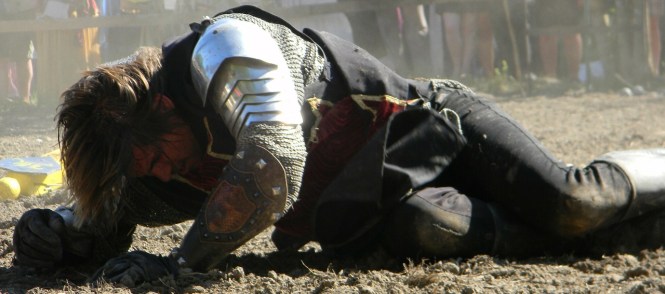
knight-321443_1280photo by jaymethunt courtesy of Pixabay

For me, the most noble way to die is defending or protecting others. Jesus said in John 15, “Greater love has no one than this, than to lay down one’s life for his friends.” So the soldier, the policeman, the fireman, the teacher, the crossing guard, whoever dies trying to protect others, they die the most heroic death. We honor them for the nobility of their sacrifice.

On the other end of the scale is the inglorious death. A life lived selfishly without thought for others, one who lives solely for oneself. We all know people who have passed, and no one missed them. They lived their lives in a totally self-gratifying way. Surely none of us would want to pass that way.

There are a lot of ways in the middle of the scale to die. You can die doing something you love. I have known of a couple of young men who have died climbing mountains. The only consolation their families had was, “They died doing what they loved.” At best, it is little consolation when you see a young life cut off while in its prime.

I don’t think any of us wants to die because of our own foolish choices. No one wants to go to a bar and die on the way home because they were drunk. We don’t want to die from an overdose of drugs. We don’t want to die from lung cancer because we chose to smoke our entire lives. We don’t want to die because we were texting while driving.

When we truly think about how we would want to die, it should give us motivation about how we should live. If we want to die in service to others, we should prepare ourselves physically, mentally and spiritually so that we have the mindset we need if we are ever in that situation. It should make us want to make right choices so that we can add to the lives of others for the short while we are here on this earth.

If we look at our lives and see that we are heading down a road of dissipation and addiction, we might want to take a day or two off from our drug of choice and really take stock of where we are. Do we need to get help to get sober or clean? There is no shame in admitting we need help. It is one of the bravest and most courageous things we can do.

Are we spending our entire lives solely trying to please ourselves? While it may feel good at the moment, in the end, our selfishness will add only a hollow ring to our lives. Remember the question put to the man at a funeral, “How much did he leave behind?” The answer was and always will be, “All of it.” We need to learn to share what we have with those less fortunate than ourselves. It will give our lives true meaning and purpose.

Let’s look at our lives and our lifestyles and see if we need to make any adjustments. After all, our lives are but a breath here, and we will soon be gone. So again I ask, “If you had your choice, how would you prefer to die?

Time Machine Moments 1.0

When you think back on your life, are there those moments when you would like to go back and give your younger self counsel? Would you like to help him or her navigate through circumstances a little bit better? I can think of many times in my life when I could have used good counsel, so whenever I write a post relating to this theme, it will be called Time Machine Moments. I will get in my Time Machine and go back and give my younger self counsel. Perhaps you will be able to relate to some of these moments as we travel back in time.time-2034990_1280photo by The Digital Artist, courtesy of Pixabay

I would take my Time Machine back to my first term in college. It was the summer session in Eugene, and all of the male students were in one dorm and the female students were in another dorm. I was walking down the hall and I heard someone crying. The door was open, and so I went into her room. She was a young, frightened foreign student from Vietnam. I didn’t know her name, but could see she obviously was in distress. Her English wasn’t good, but she was able to tell me she had gone to the eye doctor and needed glasses. She didn’t have the money to pay for them. I felt bad for her and told her I would see what I could do to help.

I went back to my room and began to think. I was seventeen myself and in a strange town where I didn’t know anyone. I was drawn into her problem by the emotion and felt motivated to do something, but what? I didn’t have much money as my father had placed me on a strict budget. So, I thought I needed to go with her to the eye doctor and ask them if they would consider giving her the glasses at a discount. I didn’t feel like I had any great social standing, so I thought that perhaps if I used an important last name, they might consider it. I chose the last name Kaiser because of the Kaiser Foundation. 

We went to the eye doctor, and I introduced myself to the receptionist. I told her the problem and asked if they would consider giving her the glasses at a reduced price. She went into the other room for quite a while and then came back and told us the doctor had approved the discount and the girl could have her glasses. She was ecstatic, and I was happy for her. I got no great satisfaction from the experience because I had lied about my name.  At that point, I didn’t feel I should go back to the office and tell them the truth, so I felt that there was nothing to do but live with it.

When would I step in and give my younger self counsel? I would show up when she came back to the dorm room after she encountered the student crying. If her plan was to go to the eye doctor, I would tell her to use her own name. It would be enough. I would tell her, “To thine own self be true,” and quote Polonius. If the eye doctor was going to give the student the glasses, it would make no difference what name she used. The generosity was up to the doctor, and she didn’t need to try to tip the scales by using a false name.

I would also tell her that she had another option. Although her father was out of town a lot, she could wait and get in contact with him. He was very generous, and he would probably just say to have the bill sent to him. If she would just step back from the urgency and the emotion of the moment, she could make better choices. I would tell her goodbye and step back into my time machine (Yes, it is a DeLorean!) until the next time she needed my counsel.vehicle-3250015_1280photo by Dtavres, courtesty of Pixabay

As I think about that experience, are there any takeaways for my life today? I think so. Many times, I am confronted by the needs of others, and there is a lot of emotion attached to those needs. I need to disassociate myself from the emotion and look at the situation objectively. Is there anything I can do or am supposed to do? If so, I should do it.

Is the situation beyond my ability to help? I would give myself the same advice I gave her: “Call your Father.” My earthly father has long since passed, but I have a Heavenly Father who is waiting and willing to answer my prayers. Jesus said, “Ask and it will be given to you.” I need to take the situation to my Heavenly Father and ask Him to intervene in the situation and provide the need. I can trust Him to work out the situation and provide what is needed. After all, He is never out of options and He knows the people who can help meet the need.

I also need to remember Polonius’s counsel. “This above all: To thine own self be true. And it must follow, as the night the day, Thou canst not then be false to anyone.” Will Shakespeare had it correct.