“Everyone who hates his brother is a murderer, and you know that no murderer has eternal life abiding in him.” 1 John 3:15
When I first read these words in the Bible, I thought they were a bit harsh. If you hate someone, you are a murderer? But I have reflected on these words a lot in the last ten days.
I was deeply saddened by the murder of Charlie Kirk. Let me tell you, I didn’t know who the man was. I had heard his name mentioned a few times, but that’s it. What saddened me was that he was killed because of his political and religious beliefs.I was also distressed by some of the reactions to his murder.
It seems to me there are not too many steps between hatred and murder. When we begin to hate someone, we naturally devalue them in our hearts. Their life matters little to us as we allow that hatred to grow and overtake us. Most of the time, we don’t murder them with a gun, but we can certainly assassinate their character with our words. We look at one person killing another and think, “I would never do that.”
But what is the real truth? Once we begin to hate someone, our heart begins to rot. We may think we are justified when we hate another person or group of people but the Lord doesn’t see it that way. He sees hatred for what it is, the antithesis of who He is and who He wants us to be.
Jesus told us, “to love our enemies” and “to pray for them who persecute you.” It is only love that will break the bondage of hatred in our hearts. As we pray for those we disagree with or have hurt us, we begin to see them for the flawed human beings they are. Their value goes up in our eyes. We also begin to see ourselves for the flawed humans we are.
Let us all do a “heart check.” Do we hate anyone or any group of people? If so, let’s ask the Lord to help us change our attitude. We can hate the things people do or say, but we are not supposed to hate them. We want God’s spirit (eternal life) abiding in us. And surprisingly, it is our willingness to pray for them that will usher in God’s grace and free our hearts from the bondage of hatred.
Now that January is almost gone, and all of my so-called resolutions have either been implemented or discarded, I thought about one resolution that I could implement each day that actually might make a difference in my neighborhood. This year, I decided that the one thing I would like to implement was to love my neighbor as myself.
You know, it sounds simple, but it really isn’t. My neighbor has her own catering business, and her garbage is near to overflowing every time she puts it out for the garbage trucks to pick up. Many times, after they dump her garbage, there is some lying on the ground. Sometimes, it blows into our yard. My first response is usually irritation as I look out the window and see it blowing by. I have decided to move from that response to a kinder response. I am thankful she has a good job. I am thankful that once in a while, she brings my husband and me lunch, etc., etc.
This may sound simplistic to you, but it has changed my outlook. Every time one of our neighbors makes a lot of noise or their dogs bark, after my initial irritation, I am choosing to think kindly of them. My neighbors don’t even know that my attitude has changed, but I know. It has made a difference inside of me.
Don’t get me wrong – I like my neighbors. I just want to have a kinder, gentler attitude towards them this year. I know I will be a nicer person inside, and perhaps some of that kindness may even move from an inside attitude to an outward action. You never know, after I pick up some of my neighbor’s trash that has blown into my yard, I may even pick up some of hers. Stranger things have happened!
For the past few weeks, our society has been focused on the Presidential Pardons being given out at the White House. The President granted his son a full pardon and today has pardoned over 1,500 people. Some of his pardons have been controversial, and others, not so much. Like it or not, over the next several weeks, we are likely to see many more pardons.
Pardons are not something that we see happen a lot. Judges don’t usually give them out and there are not many other entities that are allowed to give out judicial pardons. Because pardons are such a rare thing, they gain a lot of attention.
A lot of us have not been in jail or prison and do not have a record that is limiting our life choices. We do not normally think about pardons in the judicial sense but we are aware of the need for them in our relationships. When we apologize for something we have done that may have offended someone, we want to be pardoned (or forgiven) our wrong. If people are unable or unwilling to forgive or pardon others, they can lead to a very difficult life indeed.
When I think about pardons, I immediately think about the fact that I was given a full pardon several years ago. I was in my mid-twenties, had lived a bit of a wild life, and needed the forgiveness of God for my sins. They were weighing heavily on my mind and I wished to make a change in the way I had been living. I learned that I was not alone and that the Scripture says, “For all have sinned and fallen short of the glory of God.” I found out that God was waiting to grant me a full pardon; if only I would ask for it.
I was grateful that his Son, Jesus, had come to this earth to die in order that I might be pardoned for the sins I had committed. He paid the penalty for my sin so that my relationship with the Father could be restored and that I could live a new life. “For God so loved the world that He gave His only begotten Son that whoever believes in Him should not perish but have everlasting life,” John 3:16.
Did I deserve a full pardon? No. Did some people not understand how I could be forgiven and begin to live a new life? Yes. It didn’t matter to me. I was and am eternally grateful to the Father and his Son, Jesus, for the full pardon.
When we think about pardons, we should look inside of ourselves and see if we need a full pardon. Let’s not look at others and think about their unworthiness but look at our own unworthiness when it comes to the ability to stand before a holy and righteous God.
After looking inside, do you feel the need a full pardon? Don’t be afraid to reach out to Jesus and ask for it. He has paid the full price for all of your sins and He is more than willing to give you one if only you will ask.
Jimmy grabbed another beer and chugged it. He was already three sheets to the wind, but who cares? Tonight was the end of the season, and they had won; this party was for them. It didn’t hurt that he was the star quarterback and had a full ride to Arizona State. This was his night, and he had enjoyed every minute of it. He looked at his watch. It was late and he was ready to go home. “Hey, Bill, Tom, come on,” he said. Bill and Tom, his linebackers and best friends, were a bit hammered also. They grabbed their coats and followed Jimmy out the door.
Jared caught a glimpse of them leaving and ran out the door. “Hey guys, why don’t you let me drive you home. It’s time for me to hit the road also.”
Jimmy turned and looked at him. “Not gonna happen, you pipsqueak.” He laughed at the thought of the smallest guy on the team driving them home.
Jared looked at his three friends. He was the placekicker for the team. He didn’t drink but just came to the party to socialize and celebrate the end of the season. He knew he didn’t have the physical strength to stop Jimmy, and so he got in his car and thought he would follow them to make sure they got home okay.It had rained earlier, and now the temperature was freezing. The road was going to be slick for sure.
Jared waited about thirty seconds before he pulled out of the parking lot after Jimmy left. He then got on the narrow road and stayed a ways behind him. Jimmy was speeding up and he lost sight of them as they rounded a curve. Jared touched his brakes lightly as he came into the turn. His car slowed as he rounded the corner.
“Oh God,” he said as he saw Jimmy’s car up against a tree. The front was smashed in and the back had black smoke coming out of it. He quickly called 911 and then jumped out of the car. He saw that Jimmy, Tom and Bill looked unconscious. He prayed, “Help me God,” as he began shouting at them to wake up. Bill was the first one to start to come around and so he ran and opened his door. He unhooked his seatbelt and began talking to him. Jared helped Bill walk a safe distance and then sat him on the ground. He left him there and returned to the car.
By that time, Jimmy was beginning to come around. He had been protected by the airbag and was mumbling something about being knocked out at the game. Jared started shouting at him to wake up. He removed Jimmy’s seatbelt and half-dragged him out of the car. “Who hit us, dude?” Jimmy said. His legs were like rubber, but Jared managed to gethim to where Bill was. He let him fall to the ground and ran back for Tom. By this time, he could see flames shooting out of the other side of the car. He knew he only had a matter of seconds to get Tom to safety.
Jared opened the driver’s side back door and started shouting at Tom. Tom opened his eyes and looked at him. His eyes were glazed over but at least they were open. Jared unhooked his seat belt and pulled him out of the car. He fell to the ground and Jared helped him get up and Tom slowly limped to where the other two were.
Jared set him down, stood, and turned around to look at the car. At that moment, the car blew up and burst into flames. A piece of metal hit Jared in the chest and he was knocked to the ground. He put his hand to his chest and could feel warm liquid coming out where the metal had hit him. He started to lose consciousness and the last thing he heard was the sound of sirens coming to where they were.As the blackness was overtaking him, he thought, “Thank God my friends are safe.”
An hour later, Jimmy lay in the emergency room. He was finally awake and had sobered up enough to know where he was. His parents were there talking to the doctor. They looked worried, and he wondered if he and the other guys were going to be okay. When the doctor left, he said to his parents, “Am I going to be okay? How are the other guys?”
His father had a serious look on his face, “They’re going to keep all of you overnight for observation. The doctor said you can come home tomorrow.”
A few days later, Jimmy lay on his bed. He and Bill had been released the day after the accident and were being watched for symptoms of a concussion. Tom was still in the hospital with a broken ankle and Jared…Jared didn’t make it. He started to cry. Jared, the only sober one at the party, had risked his life to save them from the burning car. Not only had Jared saved his life, he had saved him from causing the death of his friends in the car.
The next morning, he forced himself out of bed to attend Jared’s funeral. He watched as Jared’s parents wept as the pastor spoke comforting words to them. He knew he was going to have to speak to them and tell them how sorry he was for his foolish behavior. But he knew that he would never be able to make it up to them for the loss of their son. The only innocent person that night was Jared, and he was the one who paid the price for his bad judgment. He started to cry; it was not fair, not fair at all.
We can all agree with Jimmy that it wasn’t fair that the one person who was innocent in this story was the one who paid the price for Jimmy’s poor decisions. I hope this parable somehow conveys the truth of what Jesus did for us. The Scripture says, “For when we were still without strength, in due time Christ died for the ungodly. For scarcely for a righteous man will one die, yet perhaps for a good man someone would even dare to die. But God demonstrates His own love toward us, in that while we were still sinners, Christ died for us. ” Romans 5: 6 -8. That’s some kind of love, isn’t it? And it’s there just for the asking.
Remember when you were in grade school and your teacher was teaching you how to use the dictionary? You worked on papers where you had to decide which word came first. You would receive your paper, and there would be rows of words, two at a time, and you had to circle the word that came before the other word in the dictionary. Let’s say the two words were: forgiveness and freedom. Which word would you circle? Forgiveness, of course, always comes before freedom in the dictionary. Just as it is in the dictionary, so it is in life. Forgiveness always comes before freedom. Throughout our lives, we receive many offenses from people, some large and others minute. We have two choices when we are in a position where someone has offended us: 1. We can either choose to hold on to the offense, or 2. We can forgive.
Forgiveness can be a very difficult thing to give in our lives, especially if someone has hurt us deeply. Our tendency is to want to hold on to the hurt and nurse it. After all, we have been wronged. The problem with this attitude is that the unforgiveness that we carry does not necessarily harm the other person; it only harms us. We are a container, and when we hold on to an offense, it is like a toxic substance inside of us. The toxic substance does not do our bodies or our minds any good, only harm.
When it comes right down to it, forgiveness is a choice. We must choose to forgive those who have done us wrong. When we do that, we become free of the offense. Is the process instantaneous…we forgive and then we are free? Sometimes, but not usually. Forgiveness is a process. We choose to forgive, and then we begin to walk it out. The memory may come to mind again and again, but each time we say, “I choose to forgive that person; I am not going to carry this around with me anymore.” Over and over, the process repeats, until at some point, the memory fades and that offense no longer has power over us.
You will say to me, “But you don’t understand what so and so has done to me.” You’re right, I don’t understand, but the process is the same. Jesus told us a great story about this principle. In Matthew 18, he tells us about a servant who owed a king a great deal of money; by today’s standards, it would be several million dollars. The servant could not pay the debt, and the king commanded that the man, his wife, children, and all he had be sold to pay the debt. The servant then fell down and begged him to forgive the debt. The king relented and forgave the servant of the entire debt.
The servant then went out from the king and found someone who owed him several thousand dollars. He took the man by the throat and demanded the man pay him what he owed him. The debtor begged the man to have compassion on him, and he would pay him what was owed, but the servant would not show mercy. He had the man thrown into prison. Soon, it was reported to the king what the servant had done to his debtor. The king then called the servant and demanded to know why he had treated the other man so harshly, seeing that he had received mercy. He then threw the man into prison until all of his debt was paid. The story ends with this admonition from Jesus, “So My heavenlyFather also will do to you if each of you, from his heart, does not forgive his brother his trespasses.”
The point of this story is that we all stand before God owing a great debt; that debt being our sins and trespasses. If we want God’s forgiveness, we must be willing to forgive those who have sinned or trespassed against us. It is a spiritual law of the universe. If we want it, we have to be willing to give it.
You will say to me, “But, you still don’t understand what so and so did to me.” You’re right, I don’t, but God does.
To do this, we also must understand what forgiveness is not:
1. Forgiveness IS NOT saying that what the person did was not wrong. It was wrong and nothing will change it.
2. Forgiveness IS NOT saying that the person won’t have to make restitution for what they did to you. They still may owe a debt to society and may need to go through the judicial system.
Forgiveness IS you releasing them from the wrong they committed against you. They are still responsible before God and society for what they did. You no longer have to live in a prison of hate or despair over their actions. You can be free from them.
You see, in life, just as it is in the dictionary, forgiveness always comes before freedom.
Re-Gifting…no matter how you feel about it, most of us have done it. I know I certainly have. I am a minimalist and have received many gifts over the years that I wouldn’t use. Most were really nice, and I knew people who would love to have them. Passing them on seemed like the perfect opportunity to put those presents to good use. Several years ago, I began a little “store” in one of my closets. I would put those gifts and other great buys I found during the year there. When I needed a gift, I would go into my store and find the perfect gift to give.
During this Christmas Season, it seems like another opportunity to re-gift some of those nice things that I have been given during the year. When I look in my “store”I am only finding intangibles to give this year. Hm-m-m, what should I do?
The first gift I see when I look into my store is “Forgiveness.” I have received Forgiveness from others during the year, and it seems only right to give that to those needing it. The second gift I see is “Acceptance.” So many people have Accepted me the way I am, and surely I can be gracious enough to pass that along, can’t I?As I look deeper into my “store,” I find gifts that the Lord has given me that I know He would like me to give to others. He would like me to share His Kindness with others, and for sure, His Compassion. He would also like me to share His Story. The Story about how He sent His Son to this earth to die for our sins and give those who believe in Him eternal life.
Re-Gifting….how do you feel about it? Does it have a place in your gift giving this season? Perhaps you are not into re-gifting tangible items but what about the intangibles? Some of them are absolutely priceless!
Early last week, my step-brother passed away; he checked out. He was younger than I am, and by rights, he shouldn’t have been the first one to die, but he was. I hadn’t seen him for years, so I don’t really know where he stood spiritually. He did, however, let me pray for him a few weeks before he passed. The doctors told him he had a limited amount of time, and so he had the opportunity to prepare spiritually for his turn in line. They gave him six months to live, but it was only two weeks before his name was called at The Check Out Line.
You see, we are all waiting our turn at The Check Out Line. The Check Out Line is not linear and it seems random at times. You would think the first people in would be the first to check out, but The Check Out Line doesn’t work that way. Sometimes those who have been in a relatively short amount of time are the first to go. Since none of us knows exactly when our name will be called, we must ask ourselves the obvious question, “Am I ready to check out?”
Lots of people think they are ready to check out, but they aren’t. Those who don’t believe in God or life after death think they are ready. Those who believe that “if they are a good person,” think they’re ready. Those who believe we have lots of chances at The Check Out Line think they are ready also…but they are not. The Bible says, “And as it is appointed for men to die once, but after this the judgment, so Christ was offered once to bear the sins of many. ” Hebrews 9:27-28.
We all need to make sure we are ready for The Check Out Line. There IS life after death, and we must all face Jesus, the righteous Judge of the universe, when we check out. He will, of course, look at what we have done with the lives he gave us, but the most important question will be, “What did you do with the free gift of salvation I offered you?” He DID die on the cross for our sins, and He offers us eternal life with Him in heaven. If we want to spend eternity with Him, we must choose Him before it is our time to check out.
A week ago, I was changing a bandage on a wound. It was about three weeks old, and the scar tissue had begun to form. I thought, “Well, I need to put some alcohol on this to make sure there are no germs there.” I got my bottle of alcohol out of the cupboard, put it on a cotton ball, and got ready to feel some real pain, as I knew the alcohol would sting. To my surprise, there was no pain. You see, scar tissue does not have any nerve endings when it begins to form. The nerve endings have been cut in the surrounding tissue, and initially, a person feels nothing.
I began to wonder about our soul scars. If someone could see our souls, what would they look like? Would there be wounds that had healed completely and others that were in the process of healing? Would there be wounds that were festering and causing us pain? I think if people could see our souls, they would see all three kinds of wounds.
The most obvious would be the wounds that were still open, still in the healing process. Sometimes life wounds us deeply with the loss of a loved one or some other deeply personal loss. These wounds may take years to heal, and only as our grief is felt or expressed can we truly heal. Tears are a valuable form of therapy for these kinds of wounds as they wash them and keep them clean while they are healing.
The least obvious would be the wounds that have healed, and the scars have become part of our soul’s makeup. If you look closely at them, you will see that the area around them is healthy and whole, and sometimes the scars have healed so well, they are difficult to discern.
A Soul Physician would be very concerned about the wounds that are still festering, where there is infection. We all have those kinds of wounds, whether we realize it or not. They are the wounds that have not been taken care of, and no healing balm has been applied to them. Usually, the infection has been caused by unforgiveness, and a person must purposely set out to do their part in the healing process.
Festering wounds must be acknowledged, and we must be ready to be healed from them. We must be willing to apply the disinfectant of forgiveness to them and let go of all of our unforgiveness and bitterness. Will there be pain when we lance these kinds of wounds? Yes, they may have been festering for years, but as their purulence is released, there will be a peace that takes its place.
Oh, the sweet peace of forgiveness, may it blanket our souls and make us healthy and whole!
“Forgive us our sins, for we forgive everyone who sins against us.” Luke 11:4
Have you ever been out hiking around in the country and come across an abandoned home? Many times, there is a well beside it that hasn’t been used for decades. Would we drink out of that well? Of course, not. The well could be polluted. We don’t know what the water is like, and we certainly don’t know if things have fallen into the well that would make the water polluted.
Have you ever been to a large gathering of people? You walk around talking to various people. Some of them are pleasant to be around, and others, not so much. We may start talking to a person, and what comes out of their mouth is bitter or caustic. At that point, we can hardly wait to get away from them.
Have you ever thought that people are like wells? Inside each person is a well or a soul. When we talk to people, we experience what is inside of them. Each person shares part of who they are when they communicate with us. If a person’s soul is healthy and whole, it comes out through their words. If the person is full of bitterness, envy and jealousy, that also comes across.
What about our own wells? What is inside of us? Do we need to take a look at our wells and perhaps get some of the pollution out? I’m guessing we all have some things inside our wells that need to be cleaned out. We just have to be honest with ourselves and admit that there are things inside of us that need to be changed.
Can we change ourselves? Can we make ourselves better people by the sheer force of our own will? I doubt it. I know that I would like to be a better person than I am, but I am unable to make myself so. I must submit to the Lord, let Him know my problems, and ask Him for help. Only then, can I let Him clean my well out, make me into the person I desire to be.
“If we confess our sins, He is faithful and just to forgive us our sins and to cleanse us from all unrighteousness.” 1 John 1:9
As believers in Jesus Christ, it is necessary to write to a higher standard than the secular media requires of us. If we want to write about someone who has hurt us personally, we need to think carefully about our words. It will be important to extend grace to the individual(s) as we write our story. Many times, we are not released to write about our experiences until the offending person has passed away.
Most individuals are not entirely good or evil. They are, like us, a composite of both positive and negative traits. It would be easy to portray an offending individual in the darkest of terms and paint them with a brush entirely filled with black paint, or in our case, as writers, negative adjectives. People have also been shaped by the circumstances they have endured throughout the course of their lives. When we write about them, it is important to write about some of the extenuating circumstances they found themselves in.
When people have hurt us deeply, it may take us years to fully forgive them and heal from the pain of their actions. Only because we have received the forgiveness that Christ offers, are we are able to extend that same forgiveness to the offending person. The further away from the negative experience we are, the easier it is to write about it from an objective viewpoint.
We need to remember that there are always two sides to any situation. When we portray the situation from our point of view, the offending person, if deceased, will not have the opportunity to provide an answer to our statements. There will be no one to speak in their defense, and even if their actions are indefensible, we should allow them a certain amount of latitude when sharing our story. It might seem impossible to do this, but I have found that through prayer, I am able to view them in a more compassionate light.
Remember, when writing publicly about those who have hurt us, we must reflect on the words we use. After all, dead men (or women, for that matter) can’t defend themselves!




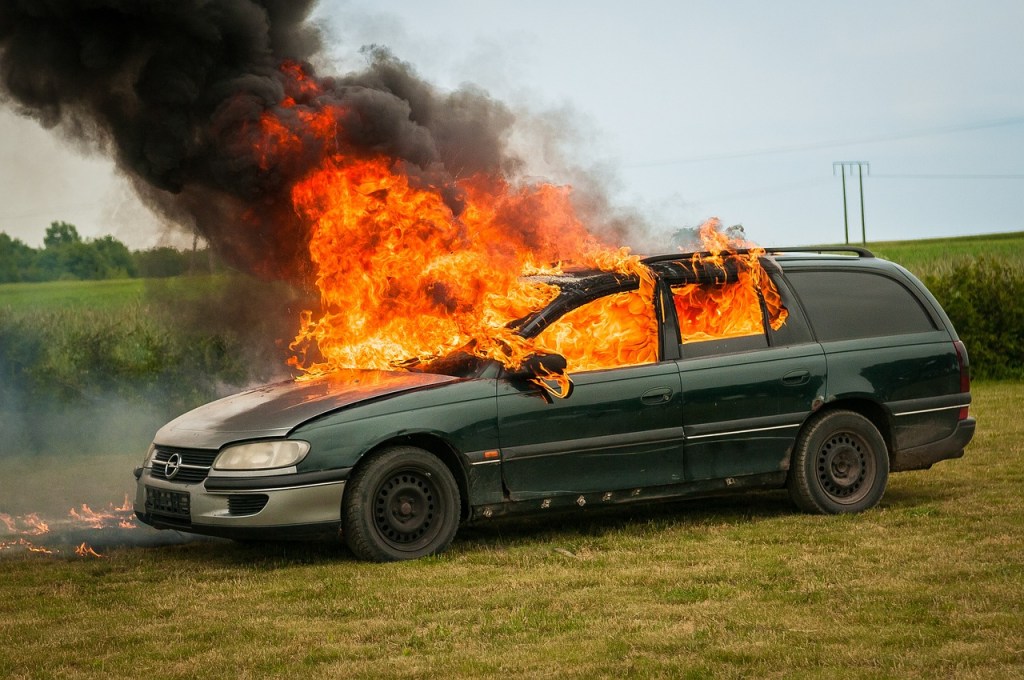



 Image by Nini. Courtesy of Pixabay.
 Image courtesy of Pixabay.
 Valerie Cullers