
When I was growing up, my father would often quote Edgar Allan Poe, “Believe nothing you hear and only half of what you see.” When he would say that to me, I would think to myself that my father was a bit of a cynic. He wasn’t one for believing every story that went around our small town.
Three decades later, after the movie Forrest Gump was released, my brother would say to me, “That movie ought to teach you not to believe everything you see on television.” Yes, I could see his point, but I thought he was a bit of a cynic also.
Fast forward three more decades, and we are dealing with deepfakes. Merriam-Webster’s dictionary defines deepfakes, as “an image or recording that has been convincingly altered or manipulated to misrepresent someone as doing or saying something that was actually not done or said.” Last week I was listening to John Haller as he was sharing a video of the President of Argentina at The World Economic Forum meeting in Davos. The man originally spoke in Spanish with a translator, but the next day someone had created a video of him (with his own voice) speaking in English. His lips were in sync with the English and the video looked real. This particular video had a disclaimer in front of it that said it had been generated by AI. If I hadn’t known it was generated by AI, I would have thought it was convincingly real.
Why do AI generated deepfakes concern most of the thinking public? There are several reasons. First, think about the harm they can do. This week, sexually explicit photos of Taylor Swift were sent out that had her face on another person’s body. These photos were up for nine hours on Twitter before they were taken down and had 45 million views. Last week, robocalls went out in New Hampshire with Joe Biden’s voice that told people NOT to go to the polls and write in his name. How many people believed that?
From here on out, political campaigns can rise or fall depending on deepfakes and how believable they are. You can bet that no matter who you are aligned with, there will be deepfakes put out disparaging your candidate and it could affect the political outcome of an election.
What about medical information? Deepfakes will come out sharing misinformation about several conditions. There was plenty of misinformation swirling around the internet related to the last pandemic. Can you imagine what will happen when the next pandemic sweeps the globe?
Jesus warned us that deception will be rampant at the end of the age. Over and over He warned us not to be deceived, “And Jesus answered and said to them, ‘Take heed that no one deceives you.” Matt: 24:4 Two more times in Matthew 24, He warns us about deception. This is not a game. It will take true discernment on our part to not be deceived by what we see.
As we move forward, AI-generated videos will be everywhere. It will not be enough to listen to one and think that it is true. We must not take what we see at face value but search out the truth. We would be wise to take Mr. Poe’s recommendation seriously. Reality is no longer “seeing is believing.” We must not believe everything we see, or we will be like the billions who will be duped on this planet.
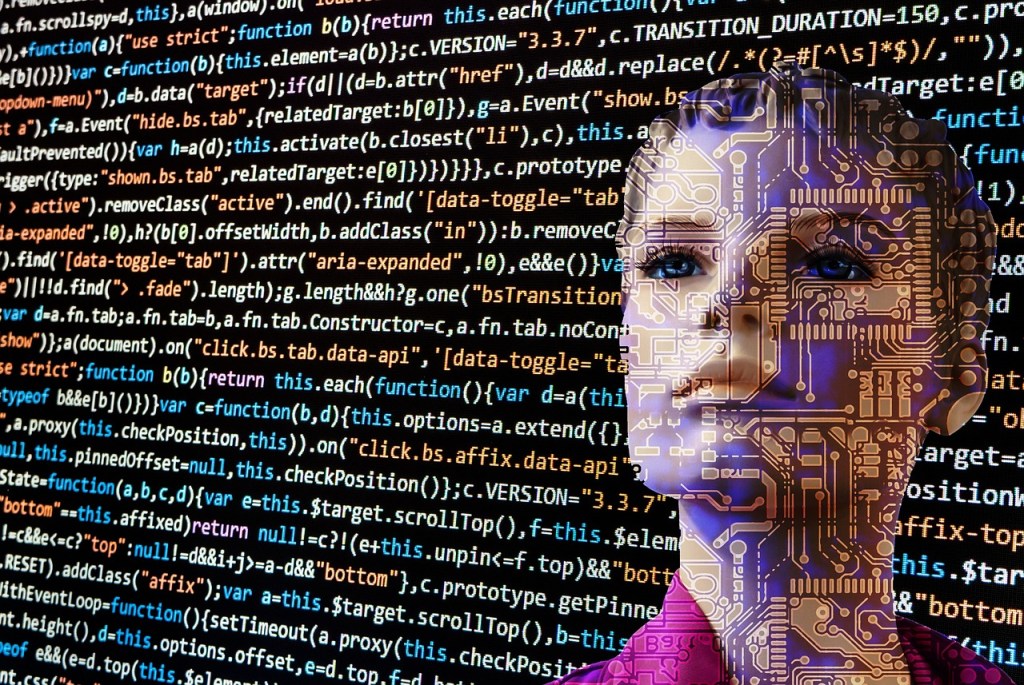
Photo by Geralt. Courtesy of Pixabay
 Valerie Cullers
It has finally begun to dawn on me just how serious the deepfake problem is. I didn’t fall for the fake Biden robocall because I don’t answer my phone unless I know the number.
LikeLiked by 1 person
I guess I heard about them a few years ago when they would market products supposedly by some celebrity or well-known doctor and then the person would come out and say they had nothing to do with them. We live in a crazy world!
LikeLiked by 1 person
That’s the understatement of the year!
LikeLiked by 1 person
AI is scary to me
LikeLiked by 1 person
Yes, we all are going to have to be much more discerning in order to know the truth!
LikeLiked by 1 person
Exactly
LikeLiked by 1 person
That’s right! Deception is everywhere. Question everything is my motto.
LikeLiked by 1 person
Great motto! And yes, you are right…it is everywhere!
LikeLike
AI is a tool to be used for good or evil dependent on the intent of the person wielding it. I do believe we need legislation to put some limits and parameters on them… Otherwise there will continue to be problems!!
LikeLiked by 1 person
Yes, so true. In the past deepfakes were at least used 75% for malicious purposes!
LikeLike
It truly is scary. The danger of many believing such fake videos is what worries me. And into agree with you that we all have to be much more discerning.
LikeLiked by 1 person
Absolutely…thanks for stopping by!
LikeLiked by 1 person
Hello blogger, I enjoyed reading your post. I subscribed. See you often. Have a happy and bright day. ^^*
LikeLike
Great post It’s overwhelming what a crazy world we live in. So different than the world we grew up in.
LikeLiked by 1 person
I know. The skills we needed a few decades ago are not going to serve us well now. We need to learn new skills in order to keep on top of it. Thanks so much for reading!
LikeLiked by 1 person
You’re so right. I guess all of us old dogs need to start learning new tricks. 😂
LikeLiked by 1 person
A nice revisit. Times are becoming weird in many instances. AI is replacing man, cultures are replacing cultures, it’s becoming more and more difficult to discern the increase in spiritual warfares; and, to top things off, we are replacing ourselves spending more time in cyberspace than in the real world, giving ourselves over to new and fake conveniences.
LikeLiked by 1 person
Absolutely right…great perspective as usual. Thank you so much for stopping by!
LikeLiked by 1 person
We really need discernment these days
LikeLike