Discount

“Discount – (verb) to decide that something or someone is not worth considering or giving attention to.” Cambridge Dictionary

If we were fortunate as children, we lived in a family where we were taught to not discount people because of their race, religion, ethnicity, or financial situation. We learned that people are not less valuable because of any of their inborn characteristics or outward circumstances.

For the past several years, people have also been discounting others because of their political beliefs. Our children in the university system have been taught to discount those who do not conform to the current norms at their institutions. On campus, they live in an echo chamber where only the accepted opinions are given any real credence or value.

This past Thanksgiving, a psychiatric intern at one university shared online that people might want to skip getting together with their families if their relatives voted for candidates they didn’t agree with. The “Northeastern Global News” stated that about one quarter of people were considering skipping the family get-together this year.

I come from a family where one of my brothers is on the far right and the other is on the far left. Would I ever consider not having dinner with them because of their political views? Absolutely not. Family is too important, and life is too short. Political candidates and opinions change like the ocean tides. To be so locked into our views that we must live in an ideological bubble where those with different views are discounted seems absurd.

Believe it or not, we can always learn from those who have different opinions than our own. We can learn why they believe what they do. We can learn to be tolerant of those who see life differently. We can learn to care about people who think differently than we do because they add to our understanding of the world around us. We can also learn to have a little humility because believe it or not, we are not always right in our opinions and we do not always see the whole picture.

Let’s learn to love those who have different political views this holiday season. Let’s not discount them as the world would have us do.

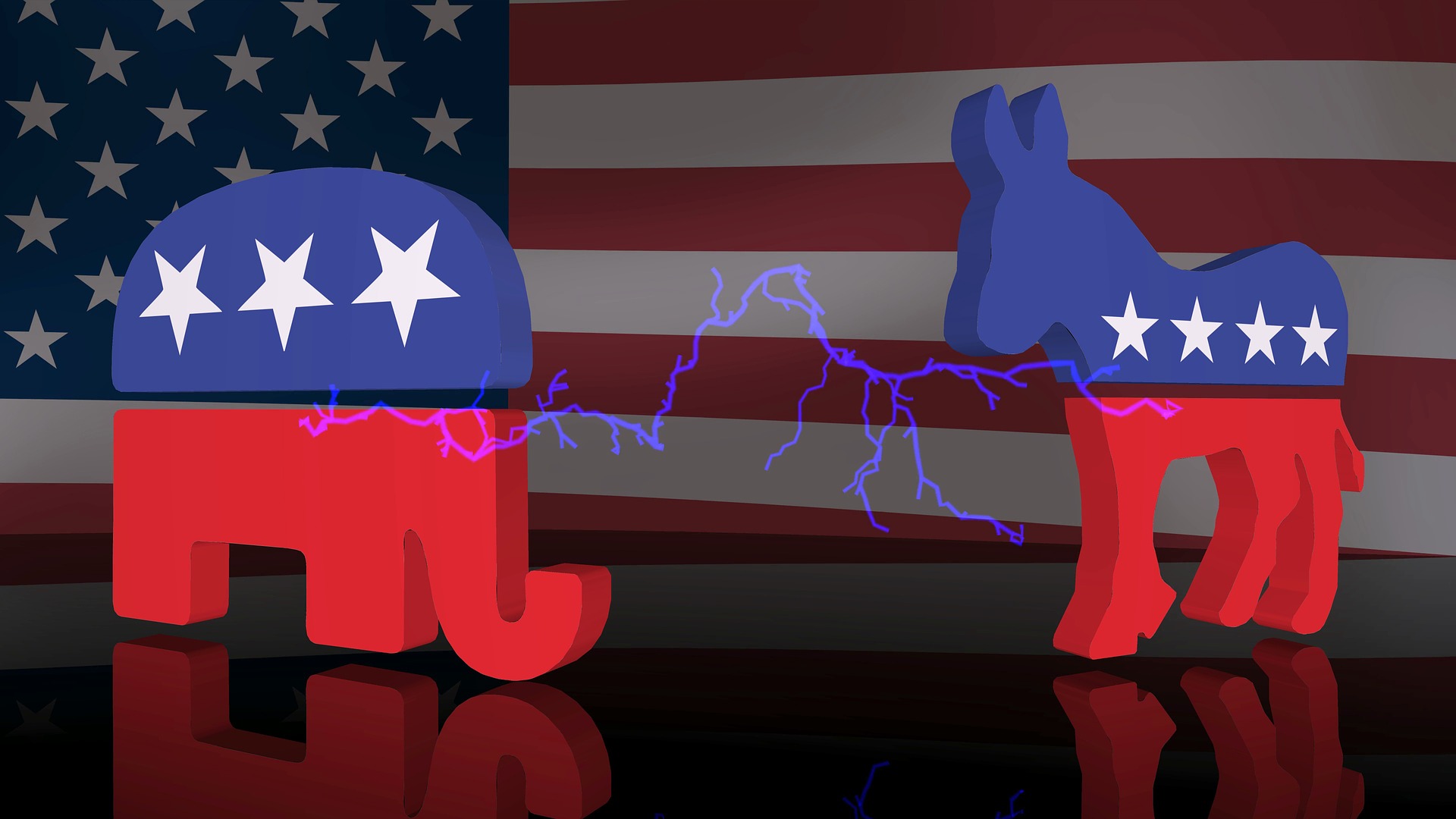
Image by Okan Caliskan. Courtesy of Pixabay

Apotheosis

“Apotheosis, also called deification or divinization, is the glorification of a subject to divine levels and, commonly, the treatment of a human being, or any other living thing, or an abstract idea in the likeness of a deity.” Wikipedia

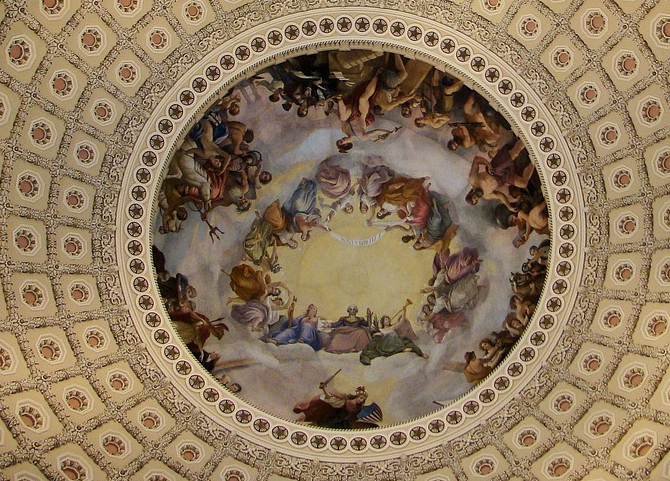
In other words, apotheosis is when we elevate a human or any other thing to the level of a god. Above is an 1865 painting by Constantino Brumidi, that is in the eye of the rotunda of the Capitol Building in Washington D.C. It is called “The Apotheosis of George Washington,” and shows Washington rising in glory, flanked by Liberty and Victory/Fame.

Apotheosis is a subject of many an art painting, but it certainly doesn’t belong in our political landscape. When I listen to people talk about the candidates that are running for office this electoral season, I am amazed that some people sound like they are elevating them to an almost god-like status. Many view Donald Trump as a would-be savior of the nation. I heard one pundit say that when he walked into the Republican National Convention, there was almost a “religious” quality to the atmosphere. On the other side of the political spectrum, many Democrats are speaking of Kamala Harris as the one who can “save our democracy.” It is amusing to see how a person who was discounted by her own party for so long has now risen within weeks to be the one who can save our nation from the supposed fascism of those on the right.

I know that political rhetoric gets hyped during an election season, but let’s please not get caught up in it. Both candidates are only human, and their frailties are on full display. One cannot stick to a subject without disrespecting his opponent, and the other changes her policy views depending on which way the political wind is blowing. Let’s get a grip and tell it like it really is. The electorate will again have to choose between two bad choices in an effort to find the best person to lead this country. My hope is that someday we may be able to find people to run who have personal and political integrity and are fully committed to this nation. We may then have better choices when it comes time to cast our ballots.

Foreshadow

“Foreshadow – “a warning or indication of a future event.” Oxford Languages

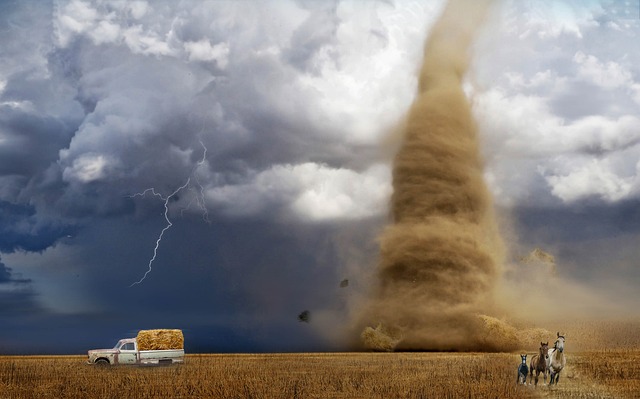
As I look at current events happening around the globe, I can see that they are foreshadowing things to come. We are watching a story unfold right before our eyes that is filled with hints as to what we can expect in the future.

Take Israel and Iran for example. When I watched the attack on Israel by Iran on April 14th, I could see this as an event that foreshadows another war that will come against Israel in the future. The Bible speaks of a war that will happen to Israel in the latter days. Found in Ezekiel 38, a coalition of forces from the extreme north of Israel (possibly Russia or Turkey) plus Iran, Sudan and Libya will come against Israel. Did you ever think that Iran would dare to strike Israel? Well, it happened. Carefully orchestrated and announced ahead of time so that their missiles would not actually hit major population centers, Iran announced to the world that it is not afraid to strike Israel. A line was crossed and there is no going back. When Iran and her allies are ready, they will invade and attack Israel.

When the time comes, will any nations help Israel? Sadly, Israel will be on her own, and we are currently watching the foreshadowing of this in cities around the world and on college campuses. Antisemitism is rearing its ugly head, and even when these demonstrations stop and the war in Gaza is over, people will continue to hate Israel. This antisemitism has taken root globally, and it will not easily be pulled out.

Not to worry, though. Even though men will not come to Israel’s defense, the Lord will strike the invading armies dead on the mountains of Israel. This will not be a pretty sight and will according to scripture affect the entire world when it sees this happen.

As we watch the foreshadowing of future events, what should our response be in this incendiary climate? For one thing, we must not be taken in by those who would hate the Jews because of the war in Gaza. We must do what we can to stand up for the people who are being persecuted in their synagogues and on college campuses. So much of this reminds me of what happened in Germany in the 1930s. Jewish hatred was whipped up within the population to the point that people believed they were subhuman. Once they were dehumanized they were systematically eliminated with little or no public outcry. We cannot let this begin to happen again, not on our watch.

Image by merandad. Courtesy of Pixabay.

Children of Regret

As a society, we are hearing more and more from young adults who are de-transitioning. We listen to their stories at hearings, on Youtube and TikTok. The National Institute of Health states that about 8 percent of people de-transition temporarily or permanently at some point. That seems like a cause for a lot of regret. For those of us listening to their stories, we wonder, “Why are kids allowed to have sex-reassignment surgery at such a young age when it is so permanent?”

My last post touched on the gender ideology that the kids are being exposed to at schools, but another big promoter of gender transition and sex-reassignment surgery is the medical industry. In August 0f 2022, the New York Post estimated that the market for this kind of surgery was about 1.9 billion the year before. Yes, that’s right…billion with a B. With that kind of profit margin, we find ourselves in an environment where those who should be speaking out to protect our children (doctors, psychiatrists, and hospitals) are not.

In an April 18, 2024 article on Fox News, Jamie Reed, a whistleblower who worked at Washington University Transgender Center of St. Louis Children’s Hospital, wrote an expose about her experiences while working there. Lest you think she is some kind of radical conservative, Ms. Reed is queer and married to a transgender person herself. She was previously in favor of sex-reassignment surgery for minors, but after working at the Center, she has since changed her mind. When asked why she changed her mind, she stated, “We started to see patients who were experiencing very significant medical harms being rushed to the emergency room with lacerations requiring stitches. We had patients contact us who were begging to have body parts put back on within months of having surgeries.” When she stated her concerns to her superiors, she was told, “This is how the industry works. If a child says they’re trans, there’s no questioning it.” No wonder she finds the industry “morally and medically appalling.”

I could go on and on with statistics about how the medical industry is profiting financially off our kids but what moves me the most are the young adults who are speaking out about what has happened to them. We are now listening to the first generation of young people who have gone through this experience and what it has done to them. This is a hot-button issue in our culture but as I see it, no child should be able to make permanent surgical decisions about their bodies that they may someday come to regret. If they still want to transition when they become adults, that is their right; but to not protect them from those who would profit from their youthful decisions is morally wrong.

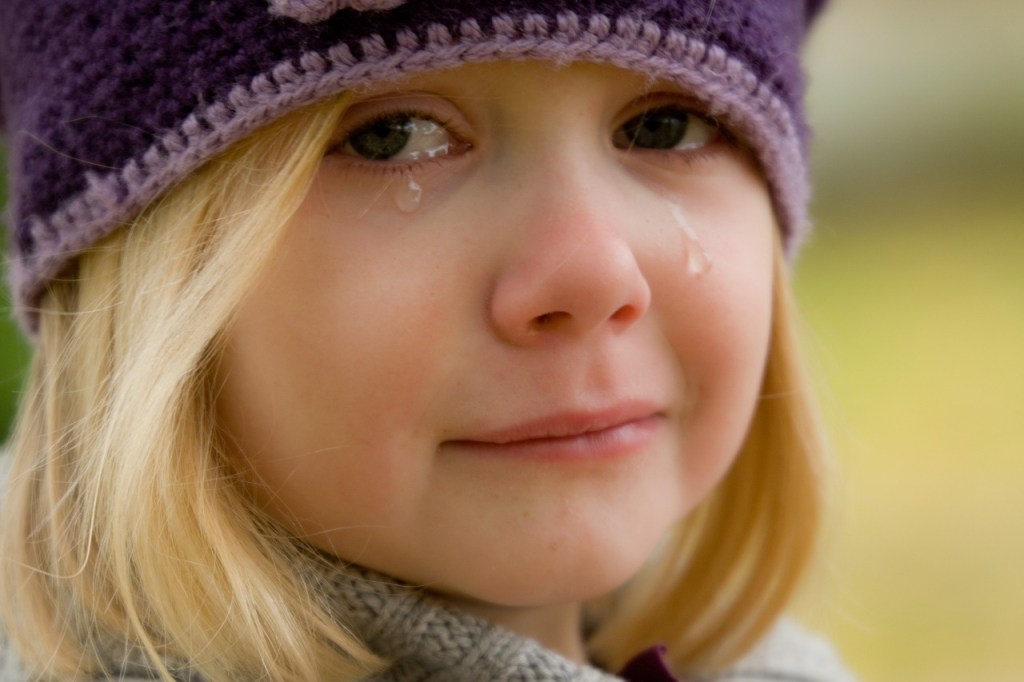
photo by tobbo, courtesy of Pixabay

What If?

As a young child with five brothers, sometimes I wished I were a boy. No, I didn’t want to be a male; I just wanted the freedom that the boys had. I was the one who had to come in early, take a bath, and get ready for bed. They were allowed much more leeway as to how long they could stay outside and play. What if I had gone to school and some teacher would have been talking about gender identification? What if she asked, “Would any of you like to be a boy?

I cringe to think what would have happened to me. For sure, I would have been singled out and sent to a psychologist. What if, as a young child, I was unable to share my feelings about freedom? No way did I want to actually be a boy…they were smelly, played in the dirt and had burping contests. I loved my new dresses and shiny shoes. Would I have been labeled non-binary? Would I have been made to go to counseling?

When I was in the fifth and sixth grades, my restrictions got tighter as my brothers’ loosened. They could go out for sports, and go to movies by themselves. In the summer, they got to work outside and I had to stay inside, clean, and pretend I wanted to learn to bake. I envied my brothers even more. If I had been talking to a counselor, I would have expressed my frustration. Would I have still been on a gender-related path…possibly dysphoria? I don’t know but I dread to think about it.

By the time I was in Junior High, things began to change. My brothers had to mow the lawn in the summer and shovel snow in the winter. If we had a flat tire, one or two of them had to go outside and help my dad. They inevitably came in dirty. At that point, I still envied their freedom, but no way would I ever say, “I wanted to be a boy.”

Perhaps my thoughts about the subject are out of proportion to what would have happened to me. Would I have been properly diagnosed early, even if I wasn’t able to express myself? I don’t know. Last week, I listened to a young woman talk about her experience. She was put on hormones after only three visits with a psychiatrist. She deeply regrets the changes that have happened to her body, and now we know that some of those changes are irreversible. She was talking about hormones, not surgery. I shudder to think about the young people who have decided they made a mistake after they had their wombs or testicles removed.

I recently read some statistics in an article written by Lindsey Tanner for The Associated Press. In her article, “younger, new guidelines say,” she states, “The World Association for Transgender Health said hormones could be started at 14, two years earlier than the groups previous advice, and some surgeries done at 15 or 17, a year or so earlier than previous guidance. The group acknowledged potential risks but said it is unethical and harmful to withhold early treatment.”

Different states have their own laws about gender reassignment surgery and treatment. It seems to me that we should protect young people as long as possible from making irreversible decisions they may one day come to regret. What if we took a step back and reevaluate our educational systems focus on gender identification and left it out of the curriculum of our primary and secondary schools? It would take this malevolent ideology away from the educators and let children and their parents deal with any real form of gender dysphoria.


Photo courtesy of Pixabay.

God is Not a Member of My Political Party

elephant-2798628_1920

When I first read the account in Scripture of Joshua and the Commander of the Lord’s army in Joshua Chapter 5, I was shocked. Jericho was the first city the Israelites were going to have to take as they entered the Promised Land. The Scripture says Joshua was by Jericho when the Commander of the Lord’s army appeared to him. Joshua specifically asked him if he was for them or for their adversaries. I expected the Commander to say, “I am for you and your people.” But he didn’t say that. He said, “No, but as Commander of the army of the Lord I have now come.

In other words, the Commander was on the Lord’s side and was there to help the Israelites accomplish God’s will. That statement gave me pause the first time I read it and it continues to give me pause, especially in today’s political climate. There are lots of people who believe that God is on their side and that he is a member of their political party. They discount the other political parties and feel that God could surely not be on their side. 

Ever since I read that verse in the book of Joshua, I have been hesitant to think that God belongs to my political party or any other. I do believe that God is concerned about people and about the issues that affect them. One political party may focus on some of those issues, and others may focus on some of the rest. For those who don’t think God cares about social issues, a good look at Isaiah 58:6-7, should let us know how he feels about them.

God shares his priorities in these two verses, and we would do well to look at them. In verse 6, He desires us to “loose the bonds of wickedness.” Surely that would talk about crime and those affected by it. Next, it says he wants us to “undo heavy burdens.” Could that mean debt and taxes? “To let the oppressed go free,” surely talks about slavery in all forms. He wants us to “break every yoke.” Would that apply to drug and alcohol addiction?

Verse 7 is just as illuminating. He wants us to “share our bread with the hungry.” Obviously, we are to be concerned about hunger. “And bring to your house the poor who are cast out;” homelessness seems to be another issue we are to address. “When we see the naked, that you cover him,” speaks about taking care of people’s basic necessities. Last, we are to “not hide ourselves from our own flesh.” We are to do our best to take care of our families before we seek help from the government or any other source.

Those two verses in Isaiah speak to several social issues, and we know that there are a lot more commands throughout Scripture about our obligation to care for the least among us. A good look at the verses in Matthew 25: 35-46 shows us that Jesus will judge the nations when he comes back. Verse 35 talks about hunger, thirst and homelessness. Those we have just discussed, but verse 36 talks about those who are sick and in prison. Surely, we should be concerned about health care and those suffering in the prison system. 

We also know that God cares about life…all life. Psalm 139:13-16 talks about how God knew us and formed us in the womb, so human life is high on his list. In Genesis 1:28, God gives man dominion over all the earth and every living thing. Man has been given the responsibility to look after animals, plants and the earth itself.

Before I discount another political party and those who work in it, I would do well to consult Scripture and see what God’s priorities are. Then I can look to his agenda and work with others, regardless of their political affiliation, to help accomplish his will here on the earth.

Scripture taken from the New King James Version, Copyright 1982 by Thomas Nelson. Used by permission. All rights reserved.

Politics and Religion – A Toxic Mix

poison-bottle-medicine-old-159296.jpegIn our country, there are two main parties, Democrat and Republican. Most people are a member of one or the other, and may or may not espouse their party’s platform. That is how our country works: we vote, elect an individual, and either two or four years later, we get to decide to re-elect that individual or vote someone else into office.

It’s called politics. It is dirty, messy and sometimes distasteful, but that is how we do things in this country. The problem comes when people decide to mix their political beliefs with their religious ones. There is nothing wrong with joining a political party because you feel their platform lines up with some of your religious beliefs, but the problem lies with associating that particular party with your religion.

Once a person does that, they begin to assume that everyone who believes what they do religiously should belong to their party. Of course, we know that is a fallacy, but if enough people align themselves with a political party because of their religious beliefs, a bloc of voters is formed, and that reinforces the idea that all people of that particular religious persuasion are part of that party.

I have been to different religious meetings, and the person talking about certain policies assumes that everyone in the room believes the way they do and is part of their political party. I have even heard people make the statement that those who are not part of their political party may not even be part of their religious belief system.

Hold on…religion is religion and politics is politics. Let’s not meld our religious beliefs with any political party. If there is an issue that we feel we must align ourselves with a certain party, great, do that, but let’s not expect everyone else’s thoughts and political beliefs to line up neatly with our political persuasion.

One political party may champion life, but the other may champion social issues. Both are important to the well-being of our country and the fabric of our society. Let us never try to pigeonhole people into one or the other party because of our own religious beliefs. It doesn’t work, is totally toxic and only tries to force people to not think for themselves and conform to whatever we think they should believe.