 When I was seventeen, I went to college. In my second term, I took a required course in “History of Western Civilization.” I remember it well. I went to a large university, and there were between one and three hundred students in my class at any one time. I sat in a large room and listened to a professor drone on and on about people groups and cultures I had never heard of. I did the reading, took the tests and passed the class, but I did not get much out of it.
Why? Because I had nothing in my mind that allowed me to relate to or put into context much of the information I was learning. Sure, I had heard about the Egyptians, Greeks and Romans by that time in my educational process, but many of the other people groups were new to me. I learned about them and placed the information in a dusty file in my mind labeled “Facts about Ancient Cultures and Dead People Groups” and promptly forgot about them.
I was twenty-four when I began to read the Bible in earnest. I read about people groups and countries that existed thousands of years ago. The information came alive to me because it was related to people, real people I was reading about who had lived millennia before.
I read about the Fertile Crescent and many of the people groups that lived there in ancient times. There were Assyrians, Chaldeans, Babylonians, Medes and Persians. The cultures and their gods were detailed, and many of their battles were recounted in Scripture. Further south of the Crescent, I read about Hittites, Amorites, Philistines, Phoenicians, Moabites, Ammonites and Hebrews. All of these people groups were related to other groups that were living at that time.
Ancient history began to come alive to me, and all of a sudden, the old maps were more than just pretty pictures with little-known countries in them. As I read about the battles between the Seleucids in Syria and the Ptolemies in Egypt in the book of Daniel, my interest was sparked. How could this information be so interesting when a few years earlier it had meant nothing to me?
It was interesting to me because it had suddenly been put into context. They were real people who lived, and their struggles and weaknesses were defined. Their gods were named, and the strength of their war machines was detailed. Just like today, there were battles going on for land and power. It was the kind of stuff that great novels are made of.

Babylonian Tile – courtesy of pcdazero – pixabay
Over the years, as I have read about archeological finds in the Middle East, the information I learned in the Bible has been confirmed. For centuries, scholars did not believe the Hittites existed until remains of their culture were found. Iraq, modern-day Assyria, Babylonia and Chaldea, is covered with archeological sites, including the Tomb of Jonah (recently blown up by Isis) and Abraham’s home city, Ur of the Chaldeans. The site of the ancient palace of Nebuchadnezzar in ancient Babylon is a few miles from Baghdad and is being rebuilt today. Further north in Kirkuk, there is a shrine to the prophet Daniel.
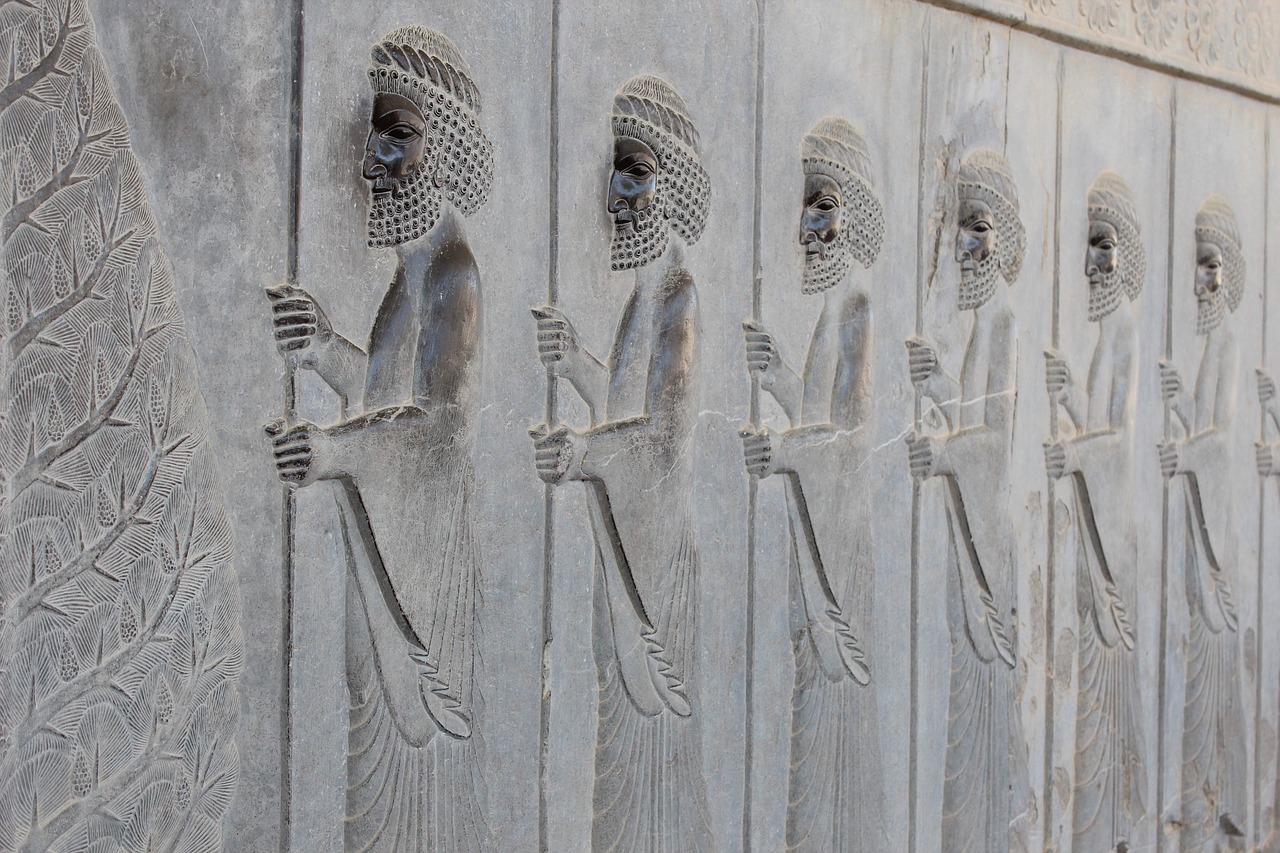
Persepolis – courtesy of ballif – Pixabay
Iran, the ancient Persia of today, is also full of important historical information. Queen Esther’s tomb is located in Hamadan, and the prophet Daniel’s tomb is in Susa, an ancient capital of Persia. The country has multitudes of historical monuments proclaiming the glory of its ancient kings who are mentioned in the Bible. Persepolis, the city constructed by Darius the Great and sacked by Alexander the Great, has spectacular ruins. The tomb of Cyrus the Great is still to be seen in Pasargadae and was itself visited by Alexander the Great. Some of the most striking historical monuments in the world are in Iran and beg to be visited by lovers of ancient history.

Old City Jerusalem – courtesy of Olaf Pictures – Pixabay
Israel is also a hotbed of archeological information. The ancient city of Jericho has been discovered, as have coins and reliefs relating to the Philistines. The remains of what is thought to be Sodom and Gomorrah have been found at the edge of the Dead Sea. Ancient coins and inscriptions relating to King David have been found in the last several years. Hundreds of finds there only confirm the information I have read in the Bible; never discount it.
As you can see, now I find ancient history fascinating. Reading the Bible has not only sparked my interest but has also given me a context in order to understand and appreciate it in a deeper way. I only wish I had read the Bible before I took that class in Western Civ. I would have gotten so much more out of the course!

 Valerie Cullers