
Post-Mortem

We all know what the literal definition of post-mortem is…i.e., an autopsy, but did you know that it is used in the cultural arena as a way to evaluate a loss or defeat? The figurative meaning is, according to Google AI, “An analytical discussion, review, or debriefing that takes place after an event, project, campaign, or game has ended or failed. The purpose is to evaluate what went wrong, what went right, and how to improve future outcomes.”
We have seen this take place recently after the last election. The losing party has been doing its own post-mortem on the election loss. Many times the results are obvious, but other times, it requires a certain amount of reflection and analysis to determine what went wrong.
We can all see the value of a post-mortem in the above situations, but have you ever thought that it can be positive to analyze our own losses, mistakes, motivations, and intentions when we have negative outcomes? The purpose is not to point fingers, assign guilt, or relieve ourselves of personal responsibility, but to take an honest look at the situation we find ourselves in.
Sometimes when we take an honest look at a problem or situation that has turned out negative, it is because we have actually done more than use bad judgment; we have actually committed one kind of a sin or another. 
Sin is definitely a negative word, and it has bad connotations, but did you know that the actual definition from the Greek word hamartia is “missing the mark”? Yes, it means that when we are shooting at a target, we have missed the bullseye or the target. 
So, in truth, sin can be something really bad and intentional, or it can be just a mistake in judgment that hurts or offends someone or ourselves. Large or small, it is important to take a good look at our behavior and evaluate it. 
Some of you (those living in glass houses) may think, “Don’t you dare mention sin to me…I am not a sinner.” But that is not at all how the Lord sees us. In His word, it says, “If we say we have no sin, we deceive ourselves, and the truth is not in us.” 1 John 1:8 The word goes on to explain that it is a universal condition: “For all have sinned, and come short of the glory of God.” Romans 3:23
Yep, take it or leave it, none of us are perfect, and can never  measure up to the perfect, sinless character of the Almighty. Fortunately for all of us, He has made a way for us to be forgiven of our sin. Jesus died on the cross to pay the penalty for our sin. Because of that, He can offer a full and free cleansing of our sin. 1 John 1:9 says: “If we confess our sins, He is faithful and just to forgive us our sins and to cleanse us from all unrighteousness.”
Long story short: the year is coming to a close. It’s a perfect time to look back and do a thorough post-mortem before we begin anew. I’m in need of a good cleansing; how about you?

Photo by Fabio Luciano Sorg. Courtesy of Pixabay



Dual Citizenship

I don’t know about you, but there are a lot of things in the Bible that I don’t understand…concepts, phrases, and allusions, to name a few. I have been a believer for decades and have read through the Scriptures many times, but I still don’t comprehend a lot of it.
One of those phrases is in Ephesians 2:6, where it says we are seated with Christ in the heavenly places. I have thought about it, drawn it out, but it still hasn’t really registered with me. I was thinking about it, and one idea I read recently said that we are dual citizens with Christ and that we have all the benefits of being citizens of heaven. 
Now that is one thought I could comprehend. Several years ago, my brothers and I thought about becoming dual citizens of another country. Our mother was born there, and we qualified to become dual citizens. It was appealing to us that if we went there for any length of time, we would be able to enjoy the benefits of citizenship. The thought of free health care was especially appealing.
Back to the concept of being citizens of heaven with Christ, I thought about all the benefits available to us. I was going to compose a list for this post, but then the Twenty-third Psalm kept coming to my mind. As I thought about each verse, I could see some of the benefits outlined, so here goes.
1. “The Lord is my shepherd” – Someone in authority who is looking out for my welfare.  “I shall not want” – Provision
2. “He makes me to lie down in green pastures” – Rest; “He leads me beside still waters” – Refreshment
3. “He restores my soul” – Emotional Healing; “He leads me in paths of righteousness for His name’s sake” – Spiritual Guidance
4. “Yea, though I walk through the valley of the shadow of death, I will fear no evil; for You are with me” – Protection; “Your rod and Your staff, they comfort me” – Guidance, Direction, and Correction
5. “You prepare a table before me in the presence of my enemies” – Victory over spiritual and physical forces of darkness. “You anoint my head with oil: – Spiritual Strength and Power; “My cup runs over” Abundant Provision
6. “Surely goodness and mercy shall follow me all the days of my life” – Physical and Spiritual Blessings; “And I will dwell in the house of the Lord forever” – The Blessed Hope of Eternal Life with the Lord.
This is just a short list of some of the benefits of having dual citizenship in heaven. There are many more, and I would encourage you to investigate them for yourself. No country on this Earth can offer you what the Lord himself can offer you should you choose to follow Christ and become a dual citizen of heaven.
Photo by Jacqueline Macou. Courtesy of Pixabay

Unrepentant

The other day, when I was in traffic, the man in front of me was driving a black Jeep. On the back of the Jeep were several stickers with skulls and a few with crossbones, and in the middle of his display was a bumper sticker that basically said he was unrepentant. He was definitely signaling for all to see that he was a bad dude.
I’ve thought about him a lot. Bad? Maybe…but definitely headed in the wrong direction, and that makes me sad.  I hate to see anyone defiant against the Lord,  and I fear for what his ultimate end will be.
Repentant is a word that is not usually used in secular conversations. It is in the Scriptures, and the Lord has a lot to say about it. Most people think that the word means to be sorry…but that is not it. In the New Testament, it is from the Greek word metanoia, which means to change one’s mind for the better.  
In other words, we look at our past sins and misdeeds, and we change our minds about them. We make a conscious decision to go a different way. When we are unrepentant, we are saying we will not change, we will stay the course we are taking.
In the orthodox churches, this past week began the season of Lent, i.e., forty days before Easter. Christians are supposed to examine their lives and see if there is something they need to repent of…some practice, some sin, some habit that has overtaken them. When we are unrepentant, we are saying to God that we are okay the way we are.
As far as I am concerned, there is not a person on this planet who doesn’t have something they need to repent of.  During this season, we would all do well to examine our own hearts. We do not want to be unrepentant. Proverbs 28:14 says: “Blessed is the one who fears the LORD always, but whoever hardens his heart will fall into calamity.”
The Lord Jesus paid a high price to cover the cost of our sins. Let’s not take it for granted. If he cared enough to put his life on the line for us, the least we can do is take a good, hard look at our own lives and see if there is something we need to repent of.

photo by john hein courtesy of pixabay.


Indifference – the Cousin of Hatred

Indifference – “lack of interest, concern or sympathy.”  Oxford languages
Last week, I was at a luncheon. I was standing in a group of women, and one mentioned Savannah Guthrie and what she must be going through. We all agreed that it must be terrible. All of us except for one. The lady said, “But she was so disrespectful to President Trump.”  I just stared at her, not believing my ears…and then I said, “What’s that got to do with anything?”
I thought about her comment a lot and realized that the media had done its job. It had caused her to be indifferent to someone with whom she politically disagreed. Lest we think we are immune to that kind of thinking, we should examine our own hearts.
How many times do we ignore or are indifferent to the suffering of those who oppose our political views? What about those who are different than us, ethnically, racially or religiously? We tell ourselves we don’t hate them, but we certainly can’t muster up any kind of sympathy for their suffering either. Our hearts have become stone cold towards them.
When Jesus told us to love our neighbor as ourselves, he gave us a parable to illustrate it. A man was on a road and was beaten up by robbers. A priest and a Levite passed by, and they both did nothing to alleviate his suffering. A Samaritan stopped and helped the injured man. He took him to an inn and made sure he was well taken care of.
Let’s put it in today’s context. A man is walking in a bad part of Tel Aviv at night. He is beaten up and robbed. He is left for dead. A religious person walks by and turns his head the other way. A lawyer walks by and does the same, wanting to get out of the place as quickly as possible. A Palestinian gets off work, walks by, and stops to help the man. He takes him to a hospital and makes sure he is taken care of. He doesn’t leave until he knows the man will live. 
Who do you think fulfills Jesus’ command to “Love his neighbor?” Obviously, the Palestinian. He was not indifferent to the suffering of the man, and he didn’t care about his race, religion, or ethnicity. 
As believers, we are not called to help everyone in the world. But we are called to care about and not be indifferent to those who are right in front of our eyes. Let us not be taken in by the tribal attitudes of today or the division that is being fostered in the media. We can make a difference if only we will view others with the same humanity we view those in our own circles of reference.
Let’s not justify ourselves and tell ourselves we are okay because we don’t hate them. At least with hatred, there is a level of emotion involved. With indifference, we are devoid of emotion, care, and concern. That should cause us all to take a second look at our stony hearts.
Photo by jhraskon. Courtesy of Pixabay. 


Heart Check

“Everyone who hates his brother is a murderer, and you know that no murderer has eternal life abiding in him.” 1 John 3:15

When I first read these words in the Bible, I thought they were a bit harsh. If you hate someone, you are a murderer? But I have reflected on these words a lot in the last ten days.

I was deeply saddened by the murder of Charlie Kirk. Let me tell you, I didn’t know who the man was. I had heard his name mentioned a few times, but that’s it. What saddened me was that he was killed because of his political and religious beliefs. I was also distressed by some of the reactions to his murder.

It seems to me there are not too many steps between hatred and murder. When we begin to hate someone, we naturally devalue them in our hearts. Their life matters little to us as we allow that hatred to grow and overtake us. Most of the time, we don’t murder them with a gun, but we can certainly assassinate their character with our words. We look at one person killing another and think, “I would never do that.”

But what is the real truth? Once we begin to hate someone, our heart begins to rot. We may think we are justified when we hate another person or group of people but the Lord doesn’t see it that way. He sees hatred for what it is, the antithesis of who He is and who He wants us to be.

Jesus told us, “to love our enemies” and “to pray for them who persecute you.” It is only love that will break the bondage of hatred in our hearts. As we pray for those we disagree with or have hurt us, we begin to see them for the flawed human beings they are. Their value goes up in our eyes. We also begin to see ourselves for the flawed humans we are.

Let us all do a “heart check.” Do we hate anyone or any group of people? If so, let’s ask the Lord to help us change our attitude. We can hate the things people do or say, but we are not supposed to hate them. We want God’s spirit (eternal life) abiding in us. And surprisingly, it is our willingness to pray for them that will usher in God’s grace and free our hearts from the bondage of hatred.

Photo by Mohamedgado15. Courtesy of Pixabay.

The Mark of the Beast

A few weeks ago, my brother called me. He had just read an MSN article titled, “Bill Gates Declares the End of the Smartphone Era and Unveils its Surprising Replacement.” The article talks about a new kind of electronic tattoo that has been developed. It uses invisible ink and has nanocapacitors that are integrated into the body. “Instead of holding a phone in our hands, these tattoos could allow us to communicate, access the internet, and even monitor our health, all without a screen in sight.” He wanted to know if I thought this new technology was “the mark of the beast.”

At the moment, I don’t believe that it is “the mark of the beast,” but that doesn’t mean that the technology couldn’t be used for it in the future. In fact, several technologies have been in place for well over a decade. A 2018 NPR article, “Thousands of Swedes Are Inserting Microchips Under Their Skin,” informs us that microchips are being used in Sweden to help people “speed up their daily routines and make lives more convenient – accessing their homes, offices and gyms is as easy as swiping their hands against digital readers.” No longer is this kind of biotechnology in the realm of science fiction or wild conspiracy theories. It is here and is being used and tested in several countries. It has been so popular in Sweden that the owner of the firm, Biohax, was “developing training materials so he can hire Swedish doctors and nurses to help take on some of his heavy workload.”

If you want to know if something is “the mark of the beast,” your best bet is first of all to read Chapter 13 in the Book of Revelation in the Bible. It talks about a man who will deceive those who dwell on the earth. He will make an image of the beast, and he “causes as many as would not worship the image of the beast to be killed. He causes all, both small and great, rich and poor, free and slave, to receive a mark on their right hand or on their foreheads, and that no one may buy or sell except one who has the mark of the name of the beast, or the number of his name.”

In my mind, in order for something to be “the mark of the beast,” you first have to have the beast, or the AntiChrist as he is called by many, on the earth and exercising power. This mark is about allegiance to this powerful man. An image will be made of him and “as many as would not worship the image of the beast will be killed.”

Make no mistake, should that person come on the earth, the technology is already here to make these prophecies a reality. In the meantime, what am I going to do? For starters, I am not going to have a microchip implanted in my body. I am also not going to have an invisible tattoo placed on my skin with all of my personal information on it. We should all be very aware as to where this technology could eventually lead and who it could be used by.

On the prophetic timeline, I see us standing at the beginning of chapter six in the book of Revelation. Many significant events are coming in the future, and the Lord’s judgments will come upon the earth before His Second Coming. It’s time to wake up and look around at what is happening in the world. Especially look at what is happening in the realm of technology. The brave new world is already here; it is not waiting in the wings. We need to familiarize ourselves with the scriptures so we are not caught off guard by events that will soon take place.

If you are interested in this subject, one of the most informative books I have read is “Revealing Revelation” by Amir Tsarfati. It is written for everyone and is easy to understand. The book is very well written and the author is humble enough to admit he and other scholars do not know what certain allegorical references mean. I would highly recommend it.

Image by Suj026. Courtesy of Pixabay.

Unrecognizable

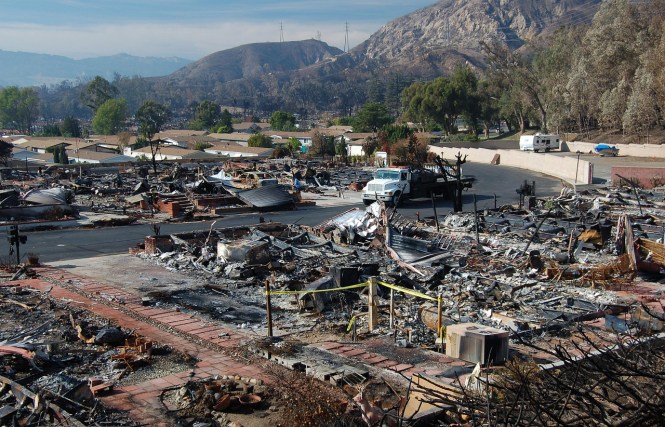
Have you ever gone to a town where you had visited and something devastating had happened there? You start to survey the landscape and look for familiar landmarks, but don’t see them. The scale of the devastation is so great that the area is unrecognizable. You aren’t sure exactly which street you are on, and it is impossible to find the features you remember. Has that ever happened to you?

If it has, you know that the first thing you do is get out your phone and call up Google Maps. You hope there is some way to get your bearings and find what you are looking for. You desperately search for something familiar so you can orient yourself to your surroundings.

That is exactly how I feel when I look at the culture around me. I feel I am living in a society that is unrecognizable from the one I grew up in. Almost every social metric has plummeted in a negative direction. Just to name a few: criminal behavior has skyrocketed because it is rewarded with a slap on the wrist and a get out of jail free card. Homelessness is accepted as a normal part of society, and few public officials are able to find a meaningful solution to the problem. The benchmarks on the education of our students are abysmal, and yet billions are thrown in that direction with little or no improvement in literacy or mathematical skills.

Unfortunately, I can’t call up Google Maps for help to try to navigate our culture. How do I, as a believer in Jesus Christ, live in a meaningful way in an unrecognizable society? The only thing I know to do is to go to the Scriptures to help me find my bearings. When I read them, I can somehow get a perspective on what I see taking place. When I look at some of the last words that Jesus spoke to his disciples, they open my eyes and help me see the signposts I am looking for.

Jesus said that the last days would be like the days of Noah. Those days were marked by violence and genetic engineering. He also said they would be like the days of Sodom. Those days were filled with sexual perversion and children being misused by unscrupulous adults. Jesus talked about the love of many growing cold, and if that isn’t one of the primary mileposts of our day, I don’t know what is. Man has stopped caring about his fellow human beings, and meaningful compassion is in short supply.

Rather than walking around dazed and confused, each of us can look to the Scriptures for clear direction. We can ask the Lord to fill us with His Spirit so that we may love our fellow man. We can do whatever is within our capabilities to make a positive difference in the lives of those around us. Then and only then will we make a significant impact and the landscape we see will become more recognizable.

A Full Pardon

For the past few weeks, our society has been focused on the Presidential Pardons being given out at the White House. The President granted his son a full pardon and today has pardoned over 1,500 people. Some of his pardons have been controversial, and others, not so much. Like it or not, over the next several weeks, we are likely to see many more pardons.

Pardons are not something that we see happen a lot. Judges don’t usually give them out and there are not many other entities that are allowed to give out judicial pardons. Because pardons are such a rare thing, they gain a lot of attention.

A lot of us have not been in jail or prison and do not have a record that is limiting our life choices. We do not normally think about pardons in the judicial sense but we are aware of the need for them in our relationships. When we apologize for something we have done that may have offended someone, we want to be pardoned (or forgiven) our wrong. If people are unable or unwilling to forgive or pardon others, they can lead to a very difficult life indeed.

When I think about pardons, I immediately think about the fact that I was given a full pardon several years ago. I was in my mid-twenties, had lived a bit of a wild life, and needed the forgiveness of God for my sins. They were weighing heavily on my mind and I wished to make a change in the way I had been living. I learned that I was not alone and that the Scripture says, “For all have sinned and fallen short of the glory of God.” I found out that God was waiting to grant me a full pardon; if only I would ask for it.

I was grateful that his Son, Jesus, had come to this earth to die in order that I might be pardoned for the sins I had committed. He paid the penalty for my sin so that my relationship with the Father could be restored and that I could live a new life. “For God so loved the world that He gave His only begotten Son that whoever believes in Him should not perish but have everlasting life,” John 3:16.

Did I deserve a full pardon? No. Did some people not understand how I could be forgiven and begin to live a new life? Yes. It didn’t matter to me. I was and am eternally grateful to the Father and his Son, Jesus, for the full pardon.

When we think about pardons, we should look inside of ourselves and see if we need a full pardon. Let’s not look at others and think about their unworthiness but look at our own unworthiness when it comes to the ability to stand before a holy and righteous God.

After looking inside, do you feel the need a full pardon? Don’t be afraid to reach out to Jesus and ask for it. He has paid the full price for all of your sins and He is more than willing to give you one if only you will ask.

Photo by Chil Vera. Courtesy of Pixabay.

The Brou Ha Ha

“Brou Ha Ha – A noisy and overexcited response to something.” Oxford Languages

Were you distracted this Easter weekend by the brou ha ha that went on because of the proclamation the White House made? I made the unfortunate decision to check the news before I went to bed on Saturday night and I saw it. Do you wonder why the President’s staff made such a decision? If they had to make a proclamation for that Sunday, surely they could have chosen Easter. After all, it is no longer a religious holiday but a secular one with eighty-one percent of Americans celebrating it. To many people, it is just about the Easter bunny, coloring eggs and chocolate.

I listened to the talking points of why the White House chose that particular proclamation but they truly rang hollow to me. They made a deliberate decision to disrespect Christians in America and say, “We’re here. We want the attention. Notice Us!” I’m sure they said to themselves, “How many news cycles will we have to endure pushback?” and the answer was, “Two maybe three.” And of course, they were right. Not many subjects stay in the forefront of the news for more than a day or two.

Hopefully next year we won’t have to deal with all the nonsense. Many will say that the outrage was because the proclamation was about Transgender Day but you can bet there would have been a lot of blowback if they had chosen National Bunsen Burner Day, Oranges and Lemon Day, National Tater Day, Prom Day, Crayon Day, Cream Cheese Frosting Day or Neighbor Day, all of which fall on March 31st. (These are actually national holidays.)

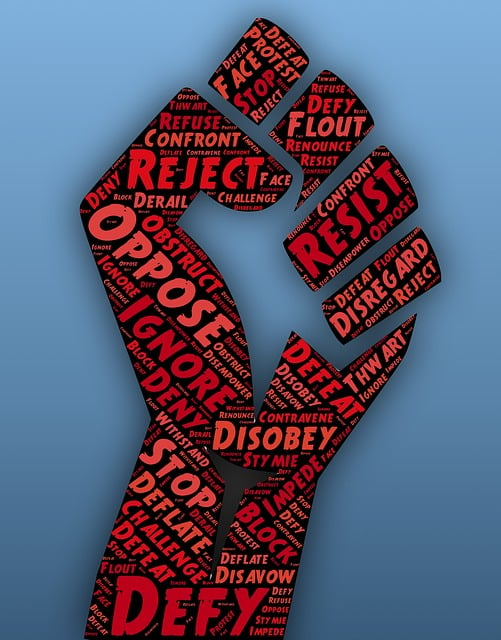
For those of you who were worried about the Lord, don’t be. He has his own view of those who like to shake their fist in His face. One only has to read in Psalm 2: “Why do the nations rage, and the people plot a vain thing? The kings of the earth set themselves, and the rulers take counsel together, against the Lord and against His Anointed, saying “Let us break Their bonds in pieces and cast away Their cords from us.” He who sits in the heavens shall laugh, the Lord shall hold them in derision. Then He shall speak to them in His wrath, and distress them in His deep displeasure.“

Next time some politician or prominent person makes a point of exalting themselves or their agenda above the Lord’s, don’t worry or be distressed by the brou ha ha that follows. Remember the Lord just laughs at them and holds them in derision. He is still on His throne and nothing can change the truth of that.

Photo by GoldJJ courtesy of Pixabay.

Delusion

Delusion – 1. a false belief or judgment about external reality, held despite incontrovertible evidence to the contrary, occurring especially in mental conditions. 2. the action of deluding or the state of being deluded. Oxford Languages

I have had a deep concern lately about deception, especially about the deception that will be coming on the world in the near future. I have already talked about AI. The advancements it has made in the past year are staggering. I have recently seen videos that have been produced by AI that are realistic and almost impossible to tell they were computer generated. For a point of reference, think about the movies you have seen in recent years with their computer generated images. Didn’t the dinosaurs in Jurassic Park seem real? What about the scenes in Star Wars? Those movies were made decades ago and think about the advancement that has been made since then. Now with AI, soon you could watch a person on a newscast with a computer generated image give you the “news,” and you will not be able to tell if it is real or not. Sound too futuristic? Believe me, it’s coming.

Yes, yes, yes, you may say to me…so what? I would say to you that that is just one level of deception that is on the horizon. There is even a deeper level of deception, i.e., delusion, that will affect the people of the world. As many have rejected God and His word, they will be open to the delusion that God Himself will send upon them. As they have rejected the real Savior, they will readily accept the false Christ that is coming to “save the world.” As we read in 2 Thessalonians verses 9-12, “The coming of the lawless one is according to the working of Satan, with all power, signs, and lying wonders, and with all unrighteous deception among those who perish, because they did not receive the love of the truth, that they might be saved. And for this reason God will send them strong delusion, that they should believe the lie, that they all may be condemned who did not believe the truth but had pleasure in unrighteousness.”

How scary is that…that a holy and righteous God will actually send people strong delusion to believe the lie? And what lie is this, you might ask? Well, there will be one coming who will look like a man of peace, a man who can solve all the world’s problems, and people will believe him. At one point, he will declare himself to be the God and Savior of the world, and he will be satanically energized and show the world all power, signs, and lying wonders with all unrighteous deception. Sounds pretty far out, doesn’t it? But just think about it.

Already we have people searching for someone who can bring peace to the world; one who can solve all the world’s problems. At the moment, they are thinking in political terms. Where is the person who can bring peace to the Middle East, stop the war in Ukraine, solve the food shortages, put an end to the violence, and have a solution to the economic problems? I know people who are looking at certain political figures and believe their guy is the one who can do it.

When we are looking for a human to provide the world’s answers, we are only a step away from accepting the man who will come on the world scene, one who looks and acts the part. It is not too far out to think that people will fall at his feet. Think about what Paul-Henri Spaak, former Belgian Prime Minister and Secretary General of NATO said, “We do not want another committee, we have too many already. What we want is a man of sufficient stature to hold the allegiance of all people, and to lift us out of the economic morass into which we are sinking. Send us such a man, and be he god or devil, we will receive him.” He made this statement decades ago before the world was in the state it is in right now.

This man is coming on the scene, the world is looking for him. The Bible says he will come, and I believe he is alive today, waiting in the wings to fulfill his role in the end times. It is important that we know these things ahead of time so that we can make the right choices now while we still have the chance.

Photo by Gerd Altman, courtesy of Pixabay.