Rejections

During the last two decades, I have been blessed to have several articles and a few books published. It was certainly encouraging when a piece was published, but that is not the whole story. For every article published, I am sure I received three rejections on another piece. Why? Because rejections are part and parcel of the writing experience.

Not only are rejections part of the writing experience, they are an essential part of it. I remember the first rejection I received. To say I was devastated is an understatement. I had thought about the piece, worked on it, refined it, etc…but no go. After I nurtured my bruised ego, I picked myself up off the floor (metaphorically) and went on.

You see, I had never intended to be a writer. Words just started coming to me and I believed the Lord was giving them to me so they could be published for others to read. No matter what my motivation was, I still had to go through the process that every writer needs to go through. I had to read, research, go to writing seminars, and connect with others in the process. I had to write, learn more, get rejected, learn more, and keep on trying. There is no way to shortcut the process, one has to write, send out their work, possibly get rejected, and continue on.

For those who are in the process, I have a few suggestions. First, educate yourself on the craft of writing. Read what you can and follow the advice given by others who have succeeded. I can’t tell you how many books I read on writing and the process of publication.

Second, write and rewrite your piece if needed. Usually, a first draft is only the beginning point, not the final product. Walk away from it for a few days or a week and pick it up again. Make any necessary corrections and read it out loud so you can get the sound of it in your ears. That is what the readers will be hearing as they read your work.

Third, know your audience. Pick up a Writer’s Market Guide or Christian Writer’s Market Guide so you send your work to the right publisher. Every publication has its own niche and you need to follow the submission guidelines for each publication. They may be similar to the last place you sent your piece but you have a better chance of getting published if you follow their guidelines to the letter.

Fourth, learn from your rejections. Most rejection letters are standard, but every now and again, an editor will give you personal feedback on your work. Take it to heart and learn from it. If they encourage you to rewrite your piece and submit it again, then by all means rewrite it. Remember, you are unique, and someone somewhere needs to hear what you are saying.

Fifth, be flexible. If an editor wants your piece but needs some modifications then, by all means, be accommodating if their suggestions don’t violate your principles. I figure there is only one Book whose words are not open to change, and that book is not mine. My work can be modified to fit a publication, whether it needs to be shortened or lengthened. If a paragraph I wrote doesn’t fit, then fine, let’s take it out.

Finally, don’t give up because of rejections. Everyone who has written for any period of time has a drawer or inbox full of them. Most of us could wallpaper at least one wall in our offices with them. I consider them my personal badge of courage because I tried and sent my work out to a publisher. I know many writers give up after their first rejection. That is like giving up if you don’t get the first job you apply for. Stay at it, sooner or later you will get your first piece published and you will be so glad you did not give up.

Image by M. from Pixabay.

Success vs. Impact

As writers, we tend to judge our writing by the markers of success. We check the likes and comments on our blog posts. As authors, we check our reviews and the numbers of copies we sell. It is normal to look for success in our endeavors, but is that the only measure of their success or worth? What about their impact?

I have read hundreds of books in my lifetime, but the ones that made an impact on me are in a separate category. I love to be entertained by a good historical fiction book and an informative non-fiction book is always welcome but how many have made a significant impact on my life?

“IMPACT – TO HAVE A STRONG EFFECT ON SOMEONE OR SOMETHING.” Oxford Languages

When I think about the books (other than the Bible) that have impacted me in my life, I think about those I read as a teenager. First and foremost was “On the Beach” by Nevil Shute. It gave me an abhorrence for the thought of all-out nuclear war. “The Prophet” by Kahlil Gibran was a lovely book of poetry and prose that spoke to my soul. And of course, “1984” and “Animal Farm” showed me about the abuses of totalitarianism. Then there were those that spoke to me as an adult. “Hinds feet on High Places” by Hannah Hurnard taught me about the difficulty of the Christian journey and the faithfulness of Christ. The Zion Covenant series by Brock and Bodie Thoene taught me about the personal costs of World War II. “The Crucifixion of Ministry” by Andrew Purves is teaching me again (as I read it the third time) about laying down “my agenda” and letting Christ work in and through me.

Impact in writing is not always about a book, though. Articles in magazines have impacted me at just the right time when I needed help or information on a subject. And blogs, how many times have blog posts spoken to me and encouraged me? One blogger who always informs and educates me is Jack Parquette, who writes the “Quo Vadis” blog. I have laughed at his wry sense of humor and been enlightened by his historical view on many of the issues we are dealing with today.

Remember, there is more to writing than the fleeting markers of success, there is the possibility of making a real impact on someone’s life.

Think about those writers, books or bloggers that have made a significant impact on your life. In the comment section below, please share some of them with us.

Image by Rony Michaud. Courtesy of Pixabay.

7 Essential Habits of Christian Writers

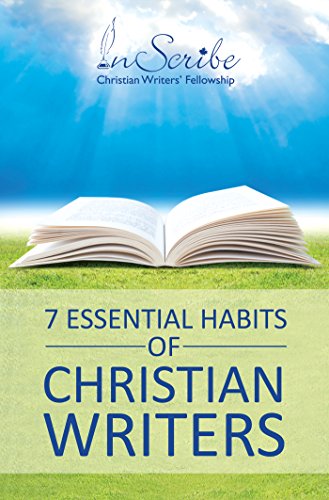
Need a good book to read this summer to inspire you to keep writing? I recommend  “7 Essential Habits of Christian Writers.” It is a collection of essays written by writers of InScribe, a Christian Writers’ Fellowship in Canada. I first found it when I was looking through Kimberley Payne’s books on Amazon. Kimberley is just one of the writers of this book.

I would love to introduce you to Kimberley. She is a motivational speaker, author and writer of spiritual and physical fitness topics. Her devotional writings relate to raising a family, pursuing a healthy lifestyle, and everyday experiences that include building a relationship with God. Kimberley has written over twenty books (most available on Kindle) for adults and children alike. You can visit her website at kimberleypayne.com.

A brief list of her books include: Fit for Faith, Trees in the Bible, Animals in the Bible, Oma Loves Her Grandbug, Feed Your Spirit, Fit For Prayer, The Four Habits of Raising Joy Filled Kids, ABC’s of Psalms for Kids, and Food for Thought.

Why not check them out today on Amazon.com?

Dead Men Can’t Defend Themselves

As believers in Jesus Christ, it is necessary to write to a higher standard than the secular media requires of us. If we want to write about someone who has hurt us personally, we need to think carefully about our words. It will be important to extend grace to the individual(s) as we write our story. Many times, we are not released to write about our experiences until the offending person has passed away.

trees in park

Photo by Pixabay on Pexels.com.

Most individuals are not entirely good or evil. They are, like us, a composite of both positive and negative traits. It would be easy to portray an offending individual in the darkest of terms and paint them with a brush entirely filled with black paint, or in our case, as writers, negative adjectives. People have also been shaped by the circumstances they have endured throughout the course of their lives. When we write about them, it is important to write about some of the extenuating circumstances they found themselves in.

When people have hurt us deeply, it may take us years to fully forgive them and heal from the pain of their actions. Only because we have received the forgiveness that Christ offers, are we are able to extend that same forgiveness to the offending person. The further away from the negative experience we are, the easier it is to write about it from an objective viewpoint.

We need to remember that there are always two sides to any situation. When we portray the situation from our point of view, the offending person, if deceased, will not have the opportunity to provide an answer to our statements. There will be no one to speak in their defense, and even if their actions are indefensible, we should allow them a certain amount of latitude when sharing our story. It might seem impossible to do this, but I have found that through prayer, I am able to view them in a more compassionate light.

Remember, when writing publicly about those who have hurt us, we must reflect on the words we use. After all, dead men (or women, for that matter) can’t defend themselves!

How Far Will Your Influence Go?

There are some specific things that I have heard over the years that stick in my mind. They make me think about them and ponder them for a long time. One of these is about influence. 

influencers-3151032_640                                                       photo by ElisaRiva courtesy of Pixabay.

I heard a pastor speaking about the final judgment. He said people will be judged not just by their works but by the influence they had on others. He spoke about how some people’s influence will last generations and affect thousands or millions of people. I have thought about that a lot.

We all have a level of influence on others’ lives. Maybe it is our family, the people we work around, the students we teach, our friends; we will influence them. There are times in our lives when we will have greater influence than at other times.

When we are given a public platform of one kind or another, our influence grows. Whether we are a speaker, writer, actor, or a pastor, we begin to influence a greater number of people than before. We need to think about that, because with influence comes responsibility and ultimately accountability before God. We can influence people in a positive direction or in a negative one.

If we are writers, think about Mein Kampf. How many people has it influenced over the decades, and what did people do with that influence? How many millions of lives were taken because people read that book and believed what it said? Conversely, what is the most positive book you have ever read? How did it influence you and change your thinking? Were you able to apply that positive influence into your own life?

As writers we will write thousands or millions of words that others will read. What kind of influence are we having over the people that read them? Are we leading them in a positive or negative direction? Are we writing things solely for our own ends or material enrichment? Do we really care about the people reading the things we write? We need to think about it and not just blow it off casually, it really does matter.

Influence…we all have it. The question is, “What are we going to do with it?”