
Cursive is on the chopping block in several school districts today. Common Core has taken it out of the curriculum, and forty-one states do not require it to be taught. Many educators do not believe we need to teach children cursive and that the time could be used to teach them more relevant subjects. So it got me thinking, will cursive soon go the way of cuneiform?

Cuneiform was developed by the ancient Sumerians between 3000 and 3500 B.C. It was the primary script in Mesopotamia for over thirty centuries and was used by at least eight different people groups, including the Assyrians, Hittites and the Babylonians. If you lived in one of those cultures, you might have thought that the use of cuneiform would continue on indefinitely. However, about 100 B.C., it was abandoned in favor of the alphabetic script.
In the 19th century, British archeologists discovered about 30,000 cuneiform tablets near the Assyrian capital of Nineveh, but they had no idea how to interpret them. Scholars worked on deciphering the tablets, but it was slow going. They could make out the names of kings, but that was about it until Henry Rawlinson, a British soldier assigned to the Governor of Persia, decided to scale the Rock of Behistun. Darius the Great had written an autobiography and had it carved into the rock face of the cliff in three different languages. Rawlinson copied part of the cuneiform in 1837 and then went back in 1844 and copied the same part of the inscription in another language. By comparing both scripts, he and other scholars were able to piece together parts of the language. By 1872, a noted cuneiform scholar, George Smith, was able to translate the Epic of Gilgamesh. Soon, other translations followed, and men were once again able to read cuneiform.
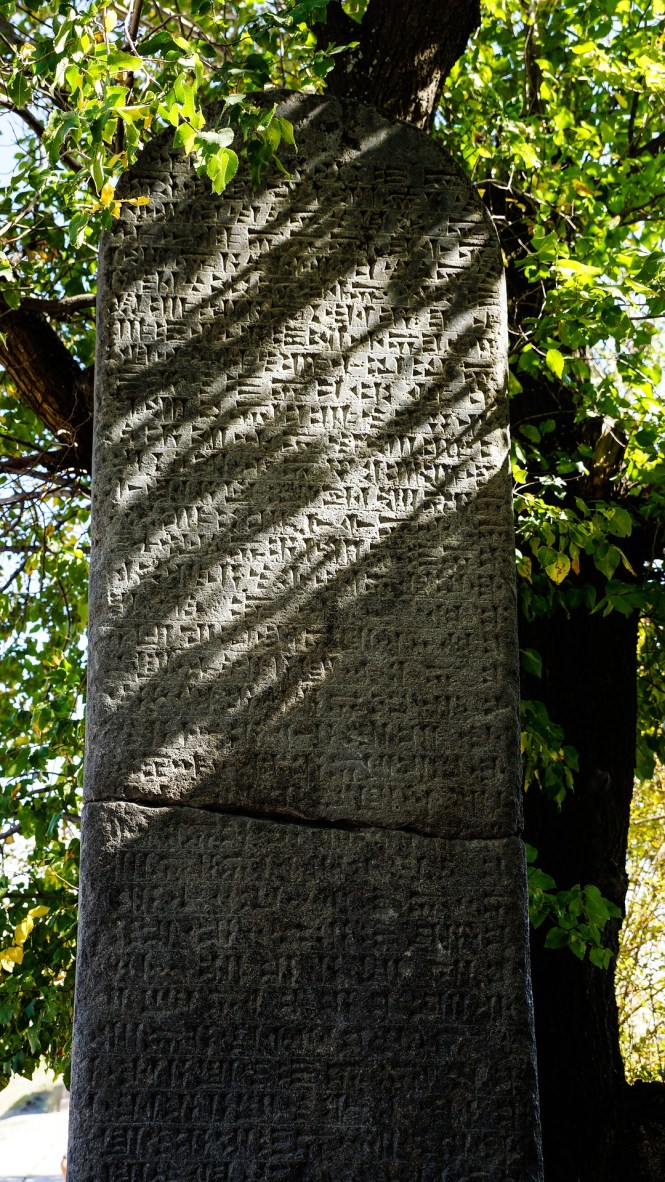
Will it be that way with cursive? Within another century, will there only be a few people who will be able to read it? Will people have to dig out a primer on The Palmer Method to read an old letter from a deceased relative or examine documents written before the twentieth century? That begs the question: Should we continue to teach cursive? Do we really need the skill in our society today?
As long as a person is required to sign their name on a legal document, cursive will be necessary. Perhaps students should take an elementary course in cursive in the third or fourth grades so that they can at least sign their names when required to. Other than that, hours drilling them in forming loops and circles might not be so productive.
Do I hate to see the skill go away? Yes, but I can understand why many educators do not see the value in it anymore. Children are taught printing at an early age and then keyboarding; those are the skills they will need most in their lives. Children need to be educated and prepared for the digital society they are living in.
References:
http://www.ancienthistoryencyclopedia., “Cuneiform”, article by Joshua Mark.
http://www.mcadams.posc.mu.edu., “The Rock of Behistun.”





 When I married my husband, I thought I was “in love” with him, but was it really love? I looked forward to our weekend dates, felt very good around him, and thought about marrying him a lot. I experienced emotional highs when he called followed by lows when I didn’t hear from him. I really loved being with him, but was that the kind of “love” one should base a marriage on?
 Being a bright child, I was always interested in learning. I graduated from high school and in my late teens and early twenties had achieved my Bachelor’s in Rescuing. I fell in love with a man with emotional problems and PTSD. I believed that if I loved him enough, I could make him well. What a shock it was to find out that all of my love made almost no difference in his ability to get better.
 During the 1960s and 1970s, students were the key to stopping the Vietnam War. Young males were being drafted to go and fight in a war that had nothing to do with the safety and security of our nation. Defense contractors were making millions off the war, and they had a powerful lobby in our capital that supported the war. There was a struggle in Washington, D.C., but not much headway was being made to bring an end to the war. Then came Kent State…
 “Then another angel, having a golden censer, came and stood at the altar. He was given much incense, that he should offer it with the prayers of all the saints upon the golden altar which was before the throne. And the smoke of the incense, with the prayers of the saints, ascended before God from the angel’s hand.” Revelation 8:3-4. NKJV
 No matter where one stands on the gun issue, one fact will always remain true. Those who intend to commit a crime will find a way to obtain a gun. They can always find a source, albeit illegal, that will provide them with weapons for the right amount of money. It’s true in this country, and it’s true in every other country in the world.
 Valerie Cullers